|
by John R. Bolton • August 21,
2017 at 11:00 am
(Image
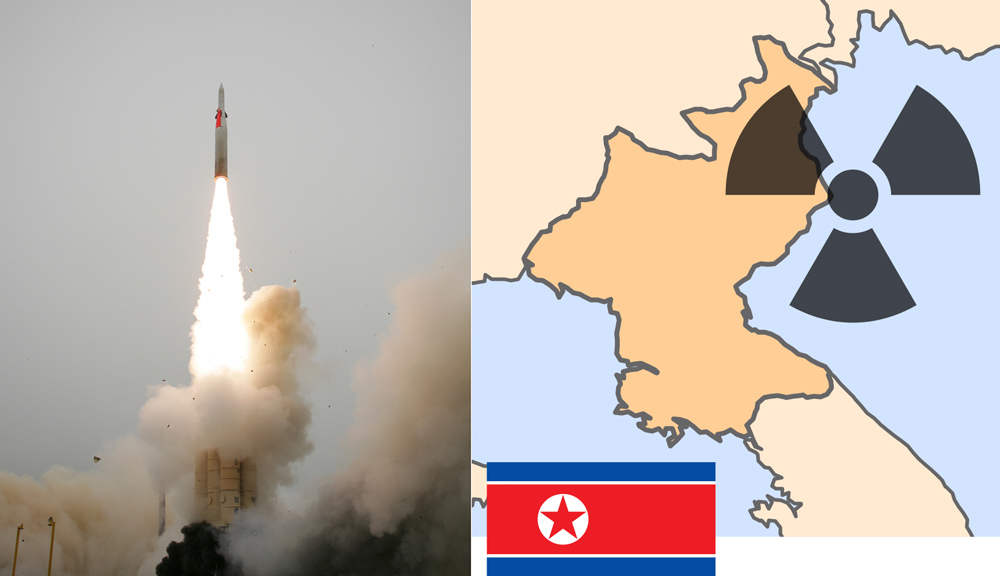
sources: Missile test - US Navy; Map & flag - Wikimedia
Commons/Acdx)
Yet another tumultuous week in domestic affairs,
starting with the Charlottesville tragedy and ending with Steve
Bannon departing the Trump White House, drove the continuing
threats of international terrorism and nuclear proliferation off
America's front pages. The media's vicissitudes may be inevitable,
but they constantly produce "surprising" strategic
developments that were both predictable and long in the making.
In that vein, one of the Trump administration's
principal legacies could well be that North Korea (and Iran) became
full-fledged nuclear-weapons states on its watch. If so, the risks
of radical Islamic terrorism will also increase correspondingly.
Certainly, President Trump's predecessors made critical blunders in
counterproliferation policy, thereby laying the foundation for this
potentially massive failure. But historical blame rests inevitably
with the administration that missed the last clear chance to
prevent it.
The mortal risk that terrorists will acquire nuclear
(or chemical and biological) weapons is all too clear. ISIS claimed
responsibility for Thursday's deadly terrorist attack in Barcelona,
which now appears part of a larger, more complex effort, foiled in
part by Spanish authorities. Friday's terrorist knifings in Finland
added to the grim news. Imagine these or other terrorist attacks
that deployed weapons of mass destruction.
|




No comments:
Post a Comment