|
by Denis MacEoin • June 15, 2018 at
5:00 am
- Whereas refugees
arriving under the UNHCR are entitled to be granted asylum and
eventually citizenship, the UAE is clear from the start that it
wants to send its refugees back home. Back home to what? To a
half-ruined country still ruled by one of history's most brutal
dictators hand-in-hand with Iran, Russia, and Hizbullah?
- As the years pass, as
more and more countries struggle with poverty, conflict,
religious extremism, terrorism, ethnic divisions, governmental
incapacity, corruption, and declining levels of education, huge
sections of the world's rapidly growing population will look in
vain for safe places... The Western states who support the UNHCR
cannot possibly handle this without suffering internal decline.
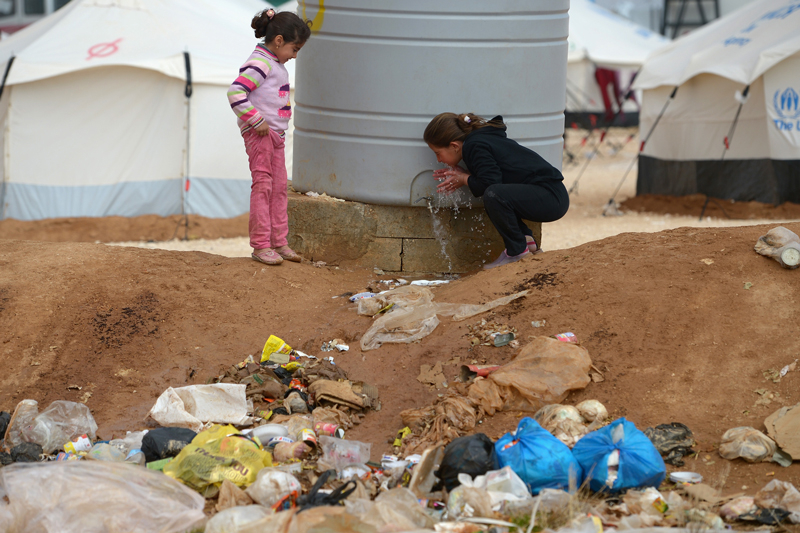
In March
2018, the Gulf kingdom of Bahrain pledged a mere $2 million "to
build schools" in the Zaatari Refugee Camp in Jordan (pictured
above). Photo by Jeff Mitchell/Getty Images.
In the first part of this series, as many surveys have
shown, we saw how difficult it has been, and apparently remains, for
many Muslims to be assimilated into non-Muslim societies.
In Part Two, we examined how difficult it remains to
allow Syrian and other refugees even to settle into other Muslim and
Arab countries, including places such as Turkey, Lebanon, Iraq, and
Jordan, which have taken in millions.
In this final part, we shall look at the remaining
Muslim countries, which have taken in few or no refugees from the
Syrian civil war. These are the richest countries in the Arab world,
and the least troubled by disintegration. Many are generous in their
funding for humanitarian aid, but that money is donated on the
understanding that the refugees are looked after by the UNHCR and the
countries they have already reached. Seeing why may be a help.
|






No comments:
Post a Comment