|
by Ahmed Charai • June 16, 2018
at 5:00 am
- Diplomacy is
changing before our eyes.
- "The unspoken
objective is to constrain the U.S., and to transfer authority
from national governments to international bodies. The
specifics of each case differ, but the common theme is
diminished American sovereignty, submitting the United States
to authorities that ignore, outvote or frustrate its
priorities.... By reasserting their sovereignty, the British
are in the process of escaping, among other things, the
European Court of Justice and the European Court of Human
Rights." — Ambassador John R. Bolton, Wall Street
Journal, March 7, 2017.
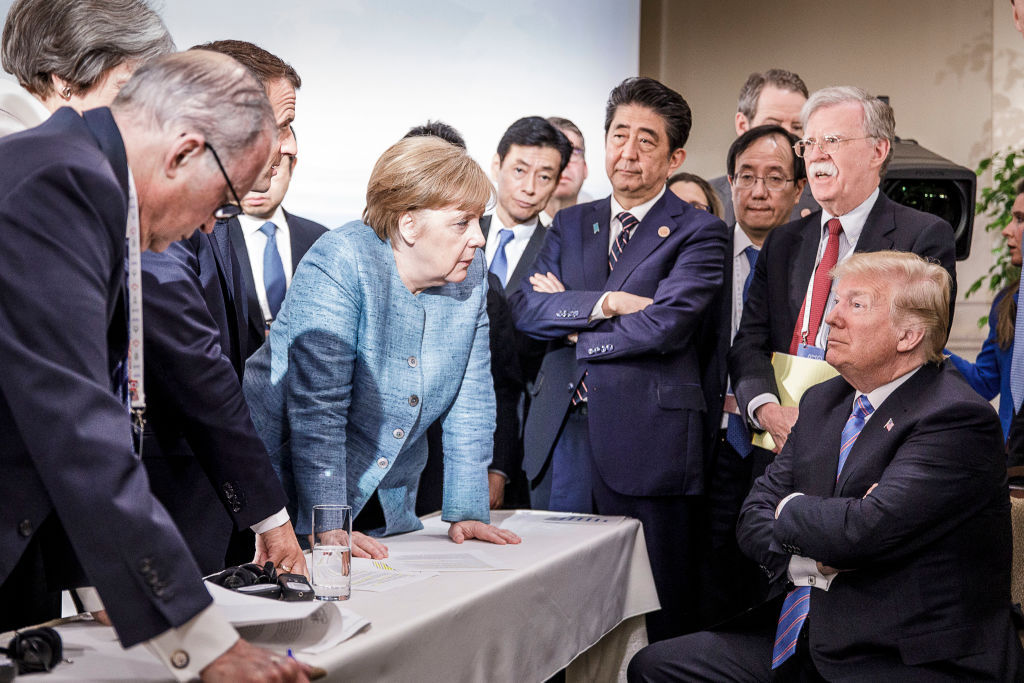
Pictured:
Donald Trump and other heads of state deliberate at the G7 summit
on June 9, 2018 in Charlevoix, Canada. (Photo by Jesco Denzel
/Bundesregierung via Getty Images)
The Singapore summit is indeed historic. First, it
is so because just a few weeks ago we were closer to a nuclear war
than to even the semblance of a peace process. The way we got here
is surprising, because it did not obey the usual rules.
A few days ago, during the G7 summit held in Canada,
US President Donald Trump upheld his decisions on tariffs and his
positions on the trade deficit. These stances followed his decision
to pull out of the Paris climate change agreement and the Iranian
"nuclear deal". It is clear that the new US administration
challenged the alliances inherited from the Cold War. President
Trump, a businessman, not a politician -- one of the reasons he was
elected -- is asking America's trading partners just to have
"free, fair and reciprocal" agreements. It is probably
not all that unusual to feel affronted when asked for money or to
regard the person asking for it as mercenary or adversarial. It
does not always mean that this feeling is justified.
|






No comments:
Post a Comment