|
by Burak Bekdil • August 24, 2018
at 5:00 am
- Ahmed Charai, in an
article for The National Interest, has forcefully
reminded the world that: "As Qatar faces international
pressure to stop harboring senior [Muslim] Brotherhood
figures, there are clear indications that it will facilitate
their migration to Turkey. So among the urgent challenges for
the U.S. allies to address is the question of how to weaken
this budding alliance."
- Charai has a point.
There is a "more-mature-than-emerging" anti-U.S.
alliance among U.S.'s presumed Middle East allies
- What should matter
to Washington in this Turkish soap opera is the fact that
Turkey is getting support, in its confrontation with the U.S.,
from "like-minded" countries: Russia, China and
Qatar. It is clearly time for Washington to rethink its
theoretical but fake alliance with Qatar, a tiny Gulf sheikhdom
that is trying to neutralize U.S. efforts to sanction Turkey
-- another theoretical ally that is more like-minded with
Russia than with the West.
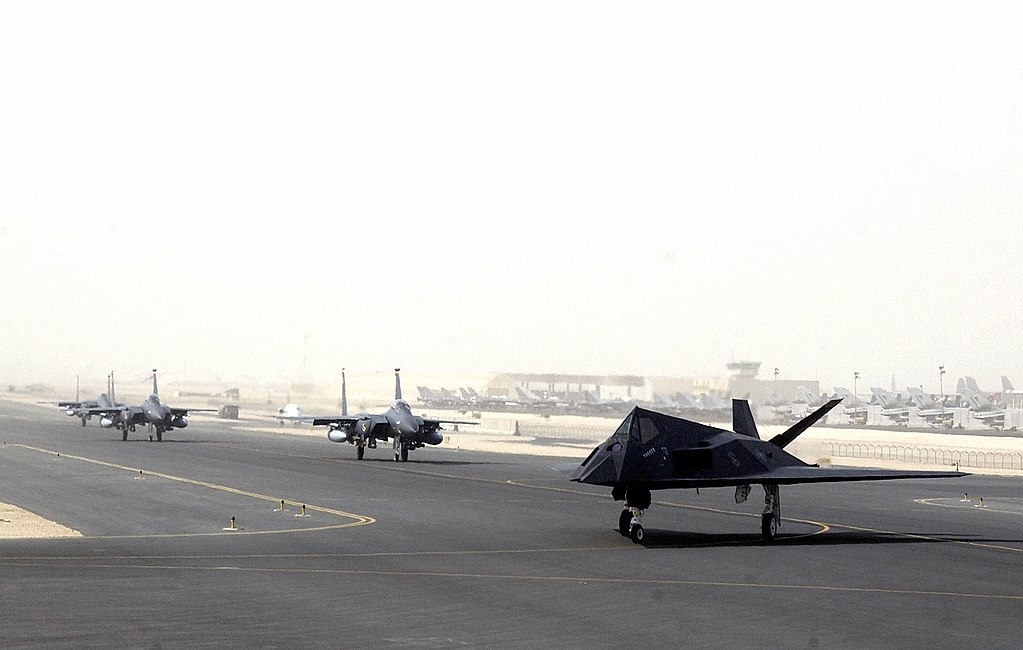
Pictured:
An F-117 and F-15s prepare to launch from the U.S. Air Force base
at Al Udeid, Qatar. (Image source: USAF/Wikimedia Commons)
In theory, the oil-rich sheikhdom of Qatar is an
ally of the United States. The peninsula hosts more than 10,000
U.S. military personnel and approximately 72 F-15 fighter jets at
its Al Udeid military base. In this turbulent part of the world,
alliances, like enmities, can be treacherous. In March, the Foreign
Affairs Committee of the US House of Representatives was already
looking at four alternatives that could become the military
headquarters when the Al Udeid contract with Qatar will expire in
2023. After "closely observing its [Qatar's] financial and
banking system due to fears of support for terrorist organisations
and individuals associated with them," Washington apparently
decided it had to rethink Al Udeid and its Qatari
"allies."
|




No comments:
Post a Comment