|
by Ahmed Charai • October 1, 2018
at 5:15 pm
- Despite hard
fighting and air strikes from Saudi and United Arab Emirates
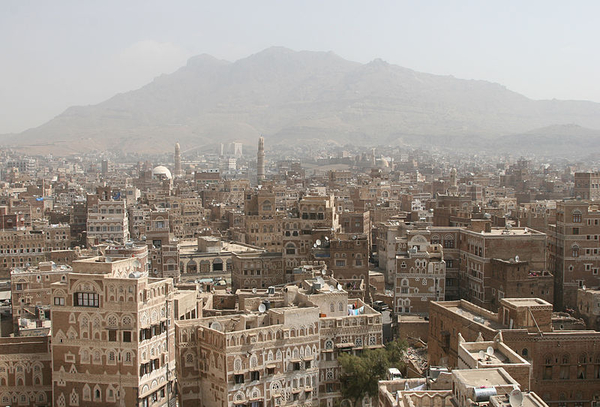
warplanes, the Houthis still control about one-quarter of
Yemen's sprawling desert lands, including its capital city,
Sana'a.
- The UAE Red Crescent
Society recently distributed food aid in Southern Yemen,
temporarily sparing some 1,000 families the horror of
starvation. Sheikh Mohammed bin Zayed Al Nahyan, Crown Prince
of Abu Dhabi and Deputy Supreme Commander of the UAE Armed
Forces, directed the emergency response project.
- Meanwhile, the Trump
Administration, has quietly met the challenge. The U.S. has
shipped more than $854 million in aid since the start of
fiscal year 2017. The good news about the bad news is that the
U.S. in engaged and helping.
In a bid
to topple the elected government of a U.S. ally, Yemen, Iran funded
Houthi rebels to seize much of the country in 2015. The war has
continued. (Wikimedia Commons)
"The world's worst humanitarian crisis,"
said U.N. World Food Program Executive Director David Beasley, is
in Yemen.
He is not exaggerating. More than 75% of the country
needs humanitarian aid—a greater percentage than any other nation
on Earth, according to the U.S. Department of State
Some 18 million Yemenis (out of a total population
of 22 million) are hungry, homeless and increasingly hopeless.
Civil war has driven them from their homes, burned
their schools and bombed their hospitals. In the markets, the
shelves are empty as few trucks arrive from sea ports and rebel
roadblocks menace the few deliverymen that dare to take the roads
into the sun-scorched interior. As a result, mothers, some too
hungry to nurse their children, have flooded into refugee centers,
overwhelming
international aid workers. The men, those who have
not been murdered or maimed by war, wait in the shade of U.N. tents
for food and medicine that too often is not enough.
|






No comments:
Post a Comment