Being a proud Atheist, and a freedom loving INFIDEL AKA "KUFFAR", WE are threatened by the primitive pidgeon chested jihad boys in the medieval east.
FRACK YOU!! SAY US ALL!! Don't annoy the Pagans and Bikers,, it's a islam FREE ZONE!!! LAN ASTASLEM!!!!
Tuesday, December 18, 2018
Bangladeshi Islamists Develop Networks in US
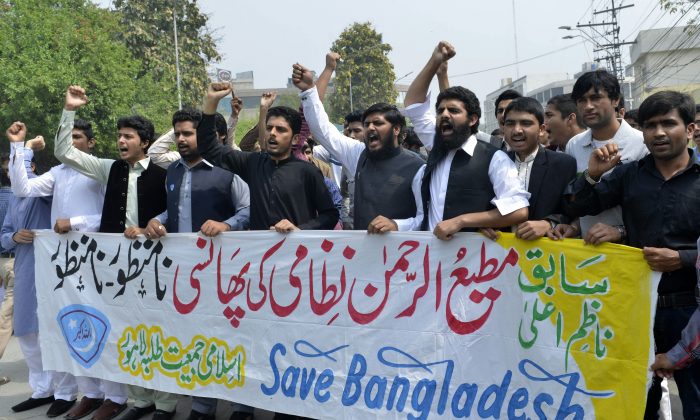
Pakistani students shout slogans
protesting the death sentence of Bangladeshi Jamaat-e-Islami leader
Maulana Matiur Rahman Nizami in Lahore, Pakistan, on March 19, 2016.
(ARIF ALI/AFP/Getty Images)
WASHINGTON—In recent years, Bangladesh has become an economic success
story in South Asia, but its future may be threatened by the rise of
radical groups and political parties, particularly Jamaat-e-Islami, as
national elections approach on Dec. 30. The growing prominence of these
radical groups is of concern for the United States, which finds an
assortment of organizations with ties to Bangladeshi radicals.
These were the concerns discussed at the Hudson Institute in
Washington on Dec. 13 by a panel of policy experts and Congressman Jim
Banks (R-Ind.).
Banks opened the event describing a “booming, democratic country”
whose population has an “overwhelmingly positive view” of the United
States, citing a Pew survey attributing 76 percent of its population
with this view.
However, the political threat represented by Jamaat-e-Islami led him
to introduce a resolution in the House of Representatives on Nov. 20
directing USAID and the State Department to “refrain from any
partnerships or funding arrangements from any organization affiliated
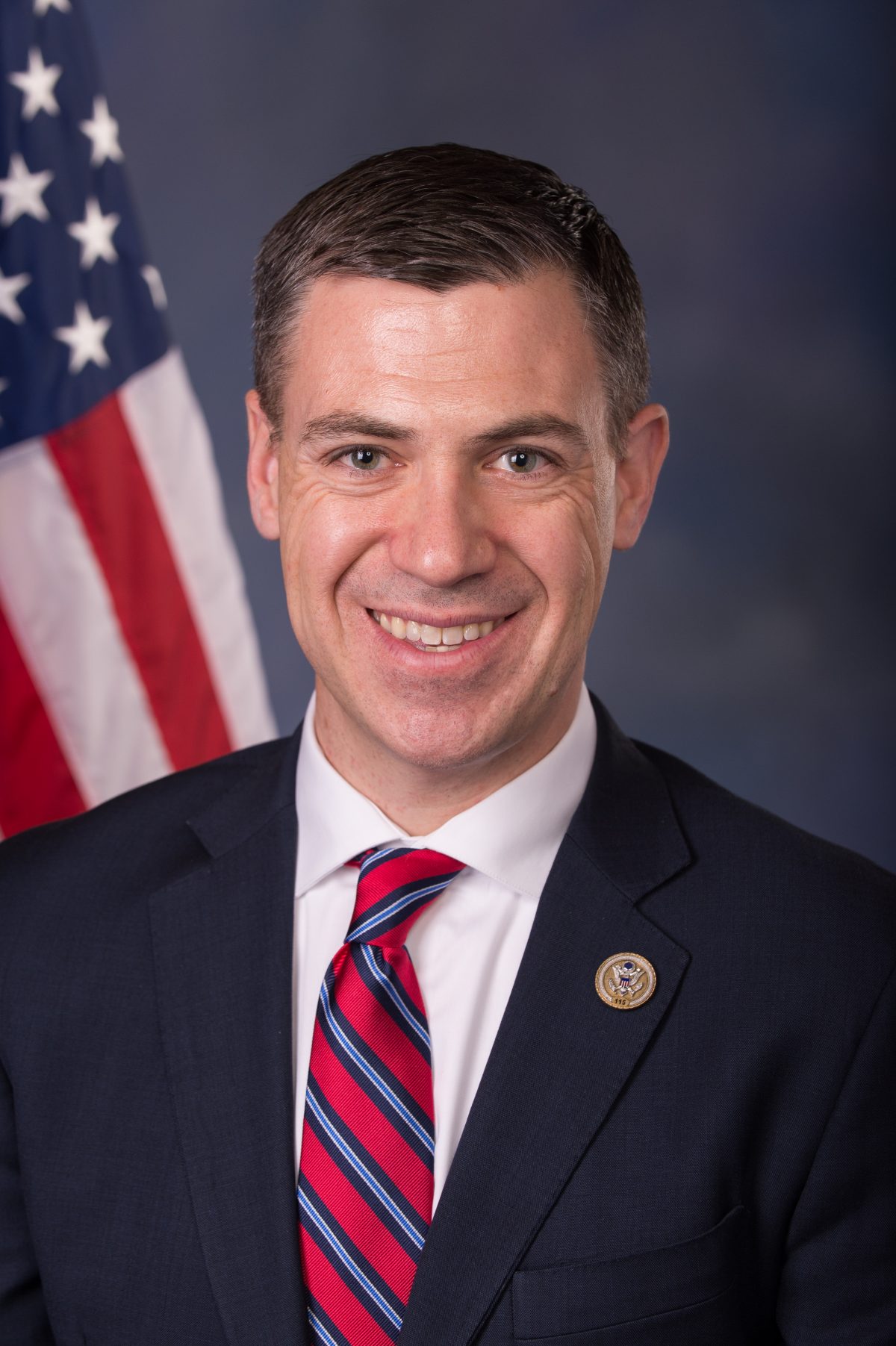
with radical Islamic groups in Bangladesh.” Representative Jim Banks. (office of Jim Banks)
Seth Oldmixon, the founder of Liberty South Asia and an expert in the
region, explained the history of Jamaat-e-Islami in Bangladesh as an
Islamist group that had been co-opted by the Bangladesh Nationalist
Party (BNP) in order to broaden its popular appeal. Unfortunately, while
being politically expedient to the BNP, its radical theocratic
philosophy actually undermines democracy and pluralism in Bangladesh, he
argued.
But Jamaat-e-Islami is by no means limited to Bangladesh. Founded in
India, there are groups related to Jamaat-e-Islami in Pakistan, Kashmir,
Britain, and Afghanistan.
Oldmixon quoted Jamaat-e-Islami’s founder, Abul Ala Maududi, as
saying: “The truth is … Islam is a revolutionary ideology and program
which seeks to alter the social order of the whole world … Islam wishes
to destroy all states and governments anywhere … which are opposed to
the ideology and program of Islam regardless of the country or the
nation which rules it.” This captured Maududi and Jamaat-e-Islami’s
founding objectives, he said, and has provided the basis for its
supremacist Islamic agenda since.
Two other panelists, Sam Westrop and Abha Shankar, supported
Oldmixon’s point, describing Jamaat-e-Islami’s ties to an assortment of
charitable and educational groups that promote its agenda in the United
States and internationally.
Westrop, the director of Islamist Watch for the Middle East Forum,
compared Jamaat-e-Islami to the Muslim Brotherhood of Egypt, but whose
operations in the United States and globally he found to be much less
coordinated with its Central Guidance Bureau in Egypt than those of
Jamaat-e-Islami with its counterparts worldwide. “There is no separation
between the political activities of Jamaat[-e-Islami] internationally
and the charitable activities. It is all part of one network.”
Shankar, a senior intelligence analyst for the Investigative Project
on Terrorism, outlined the specific ties between Jamaat-e-Islami and two
U.S. groups: the Islamic Circle of North America (ICNA) and the Muslim
Umma of North America.
Calling the groups “clever at hiding their true Islamist agendas,”
specifically as civil rights and advocacy groups, she said they employ
“doublespeak,” rather than calling publicly for jihad (holy war), or
Islamic supremacy (as called for by ICNA’s charter).
Westrop spoke in detail about a charity that emerged from
ICNA, Helping Hand for Relief and Development, which he called “the
overseas arm of the American Jamaat-e-Islami movement.” Saying it
provides the “theological and political justification for violence”
outside the United States, it is promoting the Jamaat-e-Islami alliance
with the Bangladeshi Nationalist Party in the upcoming elections.
But because it does not endorse or foment violence in America, U.S.
journalists and policymakers have ignored its openly declared
Jamaat-e-Islami leadership, occasionally even winning “praise from the
State Department.”
While Jamaat-e-Islami’s Islamist agenda poses a threat to the
political and economic progress of Bangladesh, it also represents a
serious shortcoming in U.S. policymaking that requires attention.
Shankar summarized this concern: “Instead of government officials, law
enforcement, and interfaith groups engaging with Islamists groups … they
need to reach out to mainstream Muslim voices that more accurately
represent the interests of the American Muslim community.”
No comments:
Post a Comment