|
In this mailing:
- Bassam Tawil: Palestinians:
Always on the Wrong Side
- Majid Rafizadeh: Obama Betrayed
Iranian People; Trump Stands with Them
- John R. Bolton: Pay Attention to
Latin America and Africa before Controversies Erupt
by Bassam Tawil • January 3, 2018
at 5:00 am
- Palestinians also
took to the streets to celebrate the 9/11 attacks carried out
by al-Qaeda.
- Another sign of
Palestinian support for dictators and terrorists emerged in
August 2017, when President Mahmoud Abbas sent the leader of
North Korea, Kim Jong-Un, a telegram congratulating him for
"Liberation Day."
- Something good has
come out of the fiasco surrounding the Palestinian
ambassador's association with a global terrorist: The Indians
realize now that Israel is their ally in the war on terrorism
-- certainly not the Palestinians, who again and again align
themselves with those who seek death and destruction.
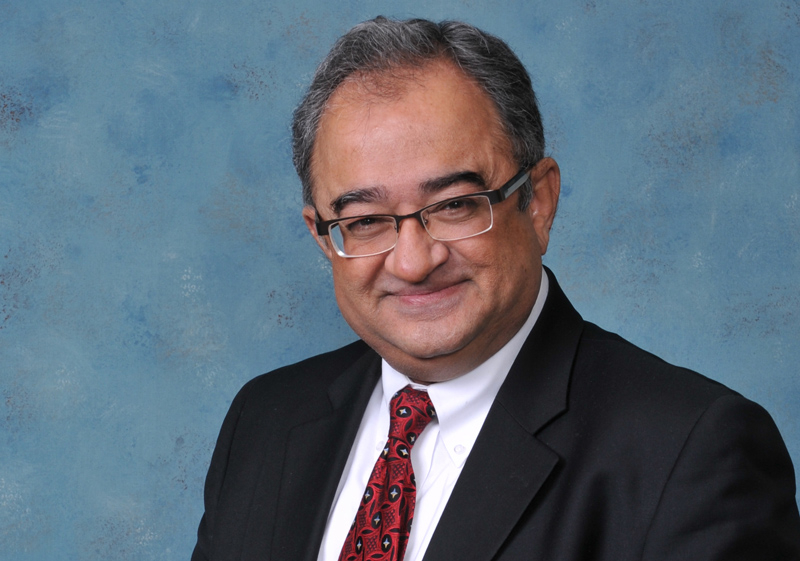
Tarek
Fatah, a Canadian-Indian writer and liberal activist who was born
in Karachi, Pakistan, tweeted: "Palestinian Ambassador to
Pakistan, Walid Abu Ali, joins wanted jihadi terrorist Hafiz Seed
on stage. Was the Palestinian Authority aware that Hafiz Saeed is
the man who ordered the 2008 Mumbai attacks? Did the Palestinian
Authority authorize this validation of India's enemy No. 1?"
(Image source: Tarek Fatah/Wikimedia Commons)
The Palestinians have an old and nasty habit of
placing themselves on the wrong side of history and aligning
themselves with tyrannical leaders and regimes. Every time the
Palestinians make the wrong choice, they end up paying a heavy
price. Yet, they do not seem to learn from their mistakes.
The latest example of Palestinian misjudgments
surfaced last week when the Palestinian Authority
"ambassador" to Pakistan, Walid Abu Ali, shared a stage
with UN-designated terrorist and Jamat-ul-Dawa leader Hafiz Saeed.
The two men appeared together at a rally that was
held to protest US recognition of Jerusalem as Israel's capital.
Thousands attended the rally in Rawalpindi, which was organized by
the Defense of Pakistan Council, an alliance of religious parties
dominated by Saeed's group.
by Majid Rafizadeh • January 3,
2018 at 4:30 am
- As a long-time
Iranian, I can tell you that the support of the US and
President Trump is invaluable to the ordinary Iranians: they
feel helpless and alone in the face of the monsters who have
been oppressing them for so long.
- On Persian social
media outlets and apps such as Telegram, which is extremely
popular among Iranians, people are cheering the US support.
People are asking the US to support them in other ways as
well, in addition to helping them bypass the internet-blocks
and shut-downs that the Iranian regime recently implemented.
- If the Iranians
succeed in changing this Islamist regime, it will bring down
the highest state sponsor of terrorism, the leading regime in
human rights violations, the top state sponsor of
anti-Americanism and anti-Semitic propaganda. Iran, with its
current regime, is a danger not just to its long-suffering
people, but to everyone. These protesters, who are flooding
the streets and demanding that their voices be heard, are
committing acts of heroism that will be felt throughout the
world and throughout history.
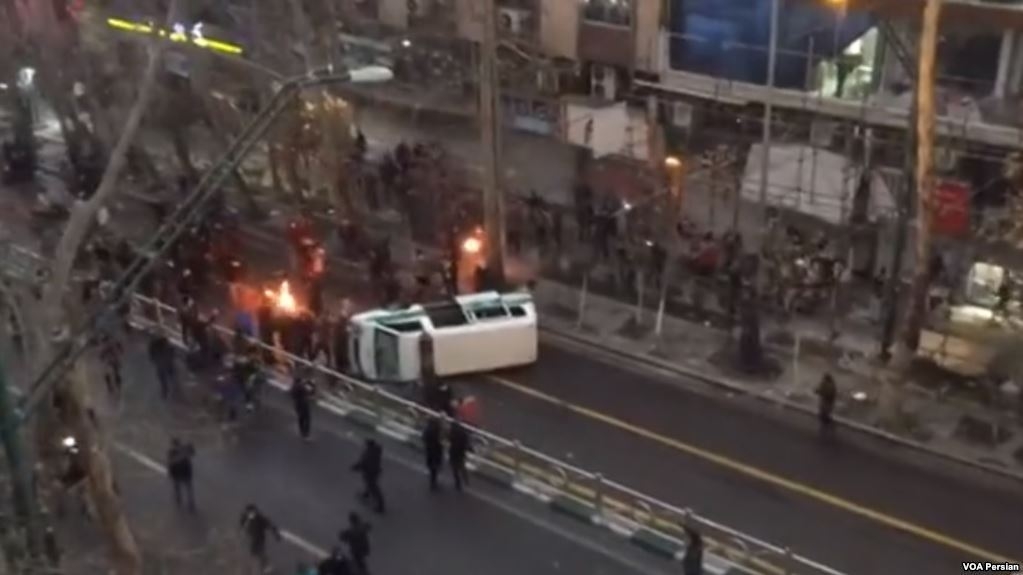
Protesters
on Valiasr Avenue in Tehran, Iran this week. (Image source: VOA)
Remember, just eight years ago, that the people of
Iran rose up in their millions against their Islamist dictatorship.
The US administration at the time stayed abhorrently silent. People
on the streets chanted, "Obama, Obama, are you with them
[mullahs] or with us?"
Washington did not offer support. The
administration's dismissal not only enabled the mullahs brutally to
crush the demonstrations with impunity; the mullahs were even
rewarded with a deal that would enable them to have a legitimate
nuclear weapons capability down the road, as well as billions of
dollars.
Obama and the Iranian regime sold the world the idea
that the nuclear agreement, appeasement policies towards the
mullahs, and the lifting of UN sanctions would supposedly help the
Iranian people and make the Iranian government a constructive
player. All facts show, then as now, that the opposite took lace
by John R. Bolton • January 3,
2018 at 4:00 am
One major
unknown for 2018 is whether Russian President Vladimir Putin will
see a strategic opportunity to reassert Russian influence in Cuba.
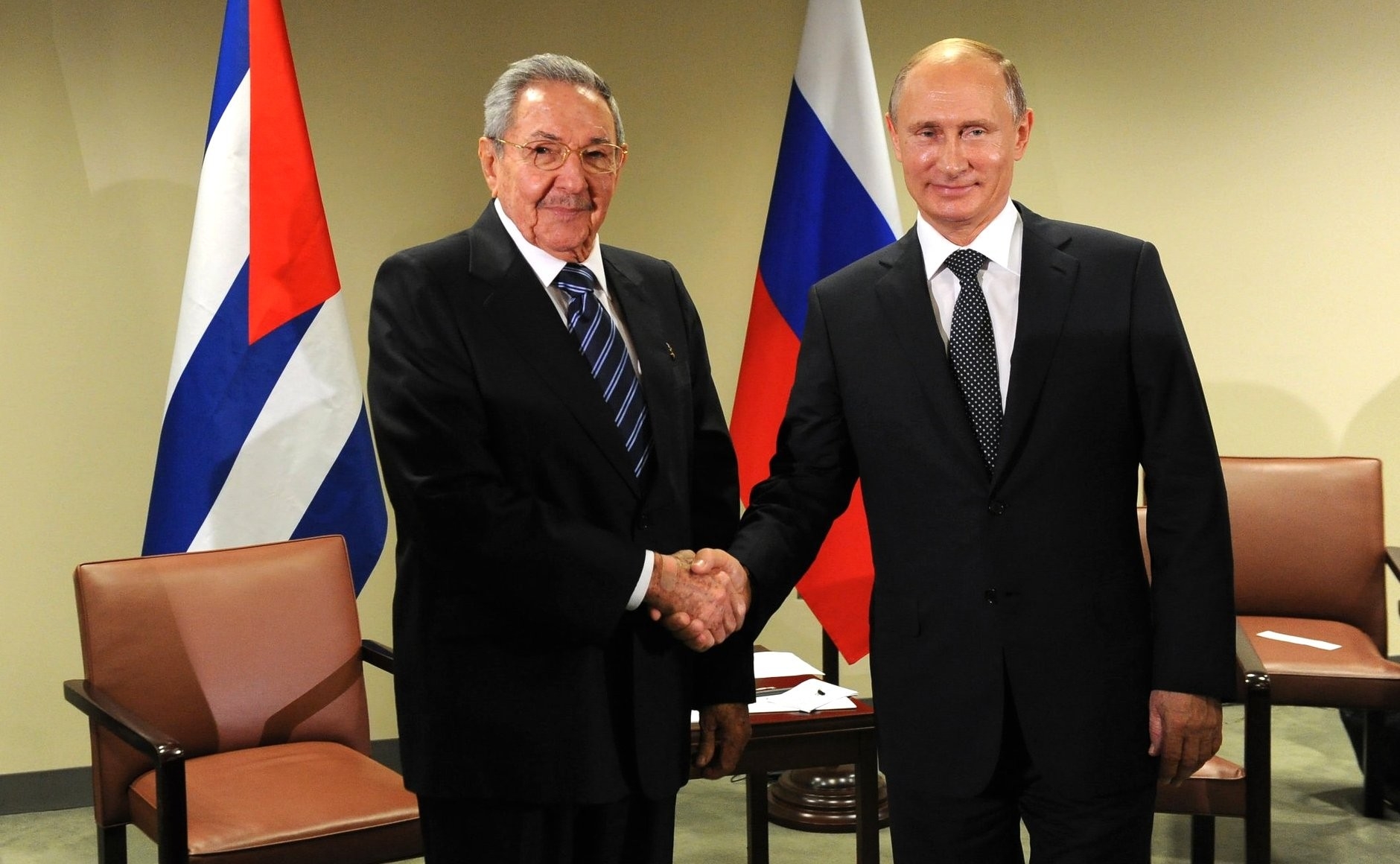
Pictured: Vladimir Putin meets with Cuban regime head Raul Castro
at the UN in New York, on September 28, 2015. (Image source:
kremlin.ru)
Latin America and Africa have rarely rated as top
U.S. foreign policy priorities in recent years, but 2018 may change
that. Political instability and the collapse of national governments,
international terrorism and its associated financing, and great
power competition for natural resources and political influence
could all threaten significant American national security interests
next year. If several simmering controversies erupt simultaneously,
Washington could find itself facing these crises with little or no
strategic thinking to guide our responses.
|






 Posts
Posts


No comments:
Post a Comment