Thursday, June 30, 2016

Turkey's Growing Influence over Islam in Austria
Gatestone Institute
Facebook  Twitter  RSS
Donate

Turkey's Growing Influence over Islam in Austria

by Soeren Kern  •  June 30, 2016 at 5:30 am
  • The Berlin-based expert on Turkey, Ralph Ghadban, warns that the Islam being preached in Turkish-controlled mosques in Europe is a "Sharia Islam with strong Turkish-nationalist overtones" that calls for a "strict separation from Western individualistic values."
  • In February 2016, the University of Vienna published study which found that Islamic kindergartens in the capital are dominated by "intellectual Salafists and political Islamists" who are contributing to the "theologically-motivated isolation" of Muslim pupils. The report calls into question claims by the IGGiÖ that anti-Western textbooks have been removed from Austrian schools.
  • Muslim students now outnumber Roman Catholic students at middle and secondary schools in Vienna, according to official statistics, which show that Muslim students are also on the verge of overtaking Catholics in Viennese elementary schools. The data confirms a massive demographic and religious shift in Austria, traditionally a Roman Catholic country.
The selection of 28-year-old Ibrahim Olgun (left) as the new leader of the Islamic Religious Community in Austria has been criticized by other local Muslim leaders as "undemocratic" and "illegal." They believe Olgun will work to increase Turkey's influence over Muslims in Austria. At right, the Saudi-funded King Abdullah bin Abdulaziz International Centre for Interreligious and Intercultural Dialogue in Vienna, which critics say spreads fundamentalist Wahhabi Islam.
The selection of an ethnic Turk to lead the Islamic Religious Community in Austria (Islamischen Glaubensgemeinschaft in Österreich, IGGiÖ), the primary representative of Muslims in the country, is being challenged by Muslim groups opposed to Turkey's growing influence over the practice of Islam in Austria.
Ibrahim Olgun, a 28-year-old Austrian-born Islamic theologian with ties to the Turkish state, was quietly named on June 19 to replace 62-yer-old Fuat Sanac, who stepped down after serving as IGGiÖ president for five years.

To subscribe to the this mailing list, go to http://www.gatestoneinstitute.org/list_subscribe.php
14 East 60 St., Suite 1001, New York, NY 10022

Anger, Honor and Freedom: What European Muslims' Attack On Speech Is Really About



Steven Emerson, Executive Director
June 30, 2016

Anger, Honor and Freedom: What European Muslims' Attack On Speech Is Really About

by Abigail R. Esman
Special to IPT News
June 30, 2016
Be the first of your friends to like this.
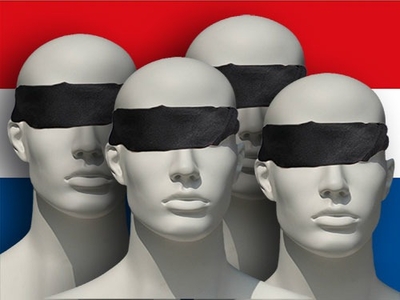
"Clash of civilizations," some say. Others call it the "failure of multiculturalism." Either way, the cultural conflicts between some Muslims and non-Muslims worldwide continue to play out as Western countries struggle to reconcile their own cultures with the demands of a growing Muslim population.
But herein lies the problem: in many ways, the two cultures are ultimately irreconcilable. There is no middle ground. And hence, the conflicts and the tugs-of-war continue.
Over the past two months, the events surrounding controversial Dutch columnist Ebru Umar have encapsulated that "clash" at its core, a salient metaphor for the tensions, particularly in Europe, between the West's Muslim populations and its own. More, they illuminate the enormity of the problems we still face.
Umar is no stranger to the spotlight, or to the wrath of Dutch Muslims who read her many columns, most of them published in the free newspaper, Metro. For years, the Dutch-born daughter of secular Turkish immigrants has raged against the failure of other Dutch-born children of immigrants, mostly Moroccan, to assimilate into the culture of their birth. She loudly condemns Dutch-Moroccan families for the shockingly high rates of criminality and violence among Dutch-Moroccan boys – as much as 22 times the rate of Dutch native youth – a phenomenon she ascribes to their Islamic upbringing and their parents' refusal to allow their children to mingle among the Dutch.
But her critiques have earned her no converts. Instead, Dutch-Moroccan youth, whom she calls "Mocros," have regularly taunted her, both online and in the street.
This past April, however, Umar added a new team of enemies to her portfolio: when, in response to Turkish president Recep Tayyip Erodogan's demand that a German satirist be prosecuted for insulting him on TV, Umar tweeted "f***erdogan," Dutch Turks turned on her in fury. "How dare you insult our president!" cried these Dutch-born subjects of Holland's King Willem-Alexander. And while Umar took a brief holiday on the Turkish coast, one such Dutch-Turk turned her in to the police. She was arrested at her vacation home in Kusadasi, and though released the following day, was forbidden to leave the country. The charge: Insulting the Turkish president. It took 17 days before discussions between Holland's prime minister and Turkish authorities enabled her to return to the Netherlands.
But she could not return home. In her absence, Umar's home had been burgled and vandalized, the word "whore" scrawled on a stairway wall. Death threats followed her both in Turkey and on her return. When it became clear she could not ever return to the apartment she had lived in for nearly 20 years, she announced on Twitter (Ebru Umar posts constantly on Twitter) that she would be moving out.
Meantime, in Metro and elsewhere, she continued her criticism of Moroccans and, as she herself notes, of Islam overall.
And so it was that on the day Ebru Umar moved out of her apartment in Amsterdam, a group of Dutch-Moroccans in their twenties came to see her off, taunting her with chants: Ebru has to mo-o-ve, nyah nyah." Though furious, she ignored them – until one of them began to film her loading her belongings into her car. For Umar, being taunted by the very people whose threats had forced her from her home in the first place was bad enough: but this violation of what little privacy remained for her was more than she could take. She grabbed her iPhone and began filming them right back. "Go ahead," she challenged. "Say it for the camera."
Scuffles ensued, and soon one of the Moroccans had her iPhone in his hand. The others laughed. Then they ran away. Umar filed a police report and, still smarting, took to Twitter once again: "C**t Moroccans, I hate you," she posted. "I hate you, I hate you, I hate you, I hate you and I hate your Muslim brothers and sisters, too. F**k you all." (It is important to note that, however offensive, the expression "c**t Moroccans" is a common epithet in the Netherlands.)
But, hey – she was angry. Her phone had been snatched from her hand in a brutal, aggressive gesture that left her feeling violated and, vulnerable. She had just been forced to leave her home. She had endured prison, a criminal inquiry, and death threats, all at the hands of the same group on whom she now spewed her fury.
Her words may have been harsh or inappropriate, but they were words. She had not struck her tormenters as they filmed her. She did not call for their demise, or strap a bomb around her waist and visit the local mosques.
She took to Twitter and said: I hate you.
"But hate," she tells me later in an e-mail, "is just an emotion." And in a column penned more than two years ago, she observed, "Hate me till you're purple, but keep your claws off me."
Here is where Ebru Umar's story becomes the story of the Western world. In response to her words ("I hate you. F*** you"), several Muslims – Moroccans and others – filed charges against her for hate speech. (Though ironically, "I hate you" does not legally qualify as "hate speech.") Such words are an attack upon their honor, a humiliation: and if there is one thing experts on Arab and Muslim culture will agree on, it is the significance of humiliation and honor in governing their lives. For this, Dutch Moroccan youth threaten Umar on the streets, and have done so, she says, for years: after all, she insults them.
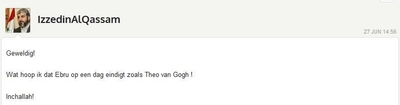
But in truth, it isn't just the youth. The broader Muslim community stands by, silent: they do not condemn the youth who taunt her, who rip her telephone from her hands, or post things on the Internet like "We hate you, too – can you please kill yourself?" or "Oh, how I hope she ends up like Theo van Gogh."
Theo van Gogh, also a controversial columnist, was shot and stabbed to death in 2014 by a radical Dutch-Moroccan Muslim.The commenter wishing her the same fate used the name "IzzedinAlQassam," the founder of modern Palestinian jihad, and an icon of Hamas leader Khaled Meshaal.
For people like this, it doesn't matter that Umar – or van Gogh – inflicted no violence, any more than it mattered that the editors of Charlie Hebdo were not violent. It was the insult, the humiliation – to them, to Islam, to Mohammed – that mattered: and an insult, a humiliation, deserves a violent response.
Indeed, much of the Muslim violence in Europe is about exactly this: intimidating non-Muslims into a fearful capitulation, where words like "I hate Muslims" and drawings of Mohammed become extinct because the Muslim communities insist that it be so. It is about forcing Westerners to rearrange their lives, their culture, to accommodate the needs and values and culture of Islam. It is about control, and the power over freedom. And it is about creating a culture in which honor is injured by words and restored through violence and terror.
When Umar says "I hate you," what she hates, really, isn't the Moroccans who attacked her or their "Muslim brothers and sisters." What she hates is this – this effort, this battle over honor and speech and freedom, and this clash between violence and expression, guns and conversation.
"I don't want Muslims to leave," she tells me, again by e-mail. "I want them to embrace the Enlightenment, Western society, the Netherlands." And in turn, she calls on the Dutch to "set rules: no violence in any sense. And stop using culture or religion as an excuse for behavior."
Ebru Umar's words. More of us should listen.
Abigail R. Esman is an award-winning freelance writer based in New York and Amsterdam, the Netherlands, with more than 20 years of experience writing for national and international magazines including Salon.com, Vogue, Esquire (Holland), Town & Country, Art & Auction (where she is a contributing editor), The Christian Science Monitor, Foreign Policy, The New Republic, Artnews and others.
The IPT accepts no funding from outside the United States, or from any governmental agency or political or religious institutions. Your support of The Investigative Project on Terrorism is critical in winning a battle we cannot afford to lose. All donations are tax-deductible. Click here to donate online. The Investigative Project on Terrorism Foundation is a recognized 501(c)3 organization.  

202-363-8602 - main
202-966-5191 - fax

Eye on Iran: Iranian President: Regional Conflicts Aimed at Diverting Attention from Israeli Crimes


Join UANI  
  FacebookFollow Us on Twitter View our videos on YouTube
   
   
Top Stories

Fars (Iran): "Iranian President Hassan Rouhani underlined that the main goal of the current turmoil and crises in the regional states is diverting attentions from the Zionists' 70 years of occupation and crimes against the Palestinian nation. 'By behind-the-scene attempts, terror, and creating conflicts among the regional and Muslim world countries and Muslim against Muslim and Muslim against Christian wars in recent years, the Zionists are trying to make others forget their crimes and make the Muslims, the regional people and the world forget the oppressed Palestine and the savagery of the Zionists,' Rouhani said, addressing a cabinet meeting in Tehran on Wednesday. 'We shouldn't let the Zionists' big crimes be forgotten, and the oppressed Palestinian nation which has been displaced and forced out of its own home feel disappointment,' he added. Rouhani called on all Iranian and world nations to show massive turnout in the International Quds Day rallies on Friday." http://t.uani.com/292J70b

The Hill: "Rep. Brad Sherman (D-Calif.) wants the Obama administration to quash Boeing's planned sale of aircraft to Iran, and block future sales, saying it is 'virtually certain' they would be used for nefarious purposes, such as ferrying arms to the Syrian regime. 'Iran Air's aircraft will undoubtedly be used in the future to continue to funnel lethal assistance to [Syrian President Bashar] Assad, to Hezbollah, and to other terrorist entities,' he wrote in a letter on Wednesday. Last week, Boeing announced an agreement for Iran Air to purchase 80 aircraft for $17.6 billion, and lease another 29 aircraft. The move came under harsh criticism from Republican lawmakers, but Sherman's letter signifies there is Democratic opposition, as well. Sherman, a senior member of the Foreign Affairs and Financial Services committees, said that although Iran Air was removed from a sanctions list as part of the Iran nuclear deal, the airline is aligned with the Iranian Revolutionary Guard Corps (IRGC), which remains under sanction... 'It is almost certain that Iran Air continues to support the IRGC and the Quds Force,' he wrote in the letter to Secretary of State John Kerry, Treasury Secretary Jacob Lew, and Secretary of Commerce Penny Pritzker." http://t.uani.com/2951d2p

Guardian: "Iran is covertly recruiting hundreds of Afghan Shias in Afghanistan to fight for Syrian president Bashar al-Assad, drawing them out of their own conflict-ridden country and into another war in which Afghanistan plays no official part. The Afghan fighters are often impoverished, religiously devout or ostracised from society, looking for money, social acceptance and a sense of purpose that they are unable to find at home. Iran's recruitment of Afghan migrants and refugees within its own borders has been documented. But similar Iranian activities inside Afghanistan had previously gone unreported. Iran denies using 'any kind of allurement or coercion', or to otherwise recruiting Afghans to fight in Syria, according to an embassy spokesman in Kabul. But a Guardian investigation can reveal both how Iran coaxes Afghan men into war, and the motives that prompt these men to travel thousands of miles to join a battle they might not return from." http://t.uani.com/295W5M1

U.S.-Iran Relations

NYT: "Nine naval officers and enlisted sailors will be disciplined for their actions in connection with an incident in January that led to 10 American sailors being taken captive by the Iranian government, according to senior Defense Department officials. A review of the incident - which occurred when two 50-foot Navy boats strayed into the waters near Farsi Island in the Persian Gulf as they were moving from Kuwait to Bahrain - will be released at a news conference at the Pentagon on Thursday morning. The review found that there were widespread mistakes made by the officers and sailors in the way they had planned and executed the mission to move the boats through the gulf. While Iran was within its right to investigate why the boats were near the island, the review will say, the Iranians violated international law in how they subsequently treated the sailors, who were held for a day, according to senior Pentagon officials. It was illegal for the Iranians to have held the sailors at gunpoint, the review will say, and to videotape interviews with them and damage equipment on the boats." http://t.uani.com/29cl97R

CNN: "Secretary of State John Kerry on Tuesday deemed Iran's presence in Iraq to be 'helpful' to American attempts to beat back the threat of ISIS, given their common enemy. The measured praise for a country with which the U.S. has a fraught relationship came at the Aspen Ideas Festival, where the secretary of state was asked to assess whether Iran was 'more helpful or more harmful' there. 'Look, we have challenges with Iran as everybody knows and we are working on those challenges,' Kerry said. 'But I can tell you that Iran in Iraq has been in certain ways helpful, and they clearly are focused on ISIL-Daesh, and so we have a common interest, actually.' ... Brent McGurk, the U.S. special envoy tasked with defeating ISIS, said earlier Tuesday that Iran-backed Shi'ite militias are mostly helpful in Iraq, though some go rogue. 'We think most of these popular mobilization forces do operate under the control of the Iraqi state, but about 15-20% of them actually do not,' McGurk said. 'And those groups are a fundamental problem.'" http://t.uani.com/29cv4ef

WSJ: "Perhaps it's a Persian riddle. Or a game of diplomatic footsy. Or just spyworld now-you-see-me-now-you-don't headfakes. Whatever it was, Central Intelligence Agency Director John Brennan gave an elaborate and cryptic response to a question about his current working relationship with Iran. 'I don't communicate with Iran,' he told journalist Judy Woodruff at an event Wednesday hosted by the Council on Foreign Relations. Ms. Woodruff seemed skeptical, 'There's zero communication - indirect?' 'I do not personally have any interaction,' he followed. Ah, personally. He went on: 'I do not have any interaction, any formal liaison relationship or engagement with Iran,' he said, starting to sound like he was regurgitating something he had memorized. Ms. Woodruff asked if others at the CIA communicated with Iran if Mr. Brennan did not. 'The agency does not,' he quickly answered. That seemed to settle it, until he added, 'no formal intelligence liaison relationship.' This elicited laughter from the audience. Ms. Woodruff seemed willing to leave it at, but Mr. Brennan felt compelled to add, 'But we know the Iranians very well. Just saying.'" http://t.uani.com/297BMmi

AFP: "Iranian police cancelled a catwalk show set to mark the opening of an unofficial Levi's store in a Tehran shopping center, the Tasnim news agency reported Thursday. The event was cancelled by 'a last-minute police intervention' just before male models were set to walk on stage before a crowd of about 150 Wednesday night, the news agency said... Most U.S. companies are still banned from doing business with Iran despite a nuclear deal that lifted some sanctions in January... Posters advertising the event and using the Levi's logo were still available on the shopping center's Instagram and Telegram pages." http://t.uani.com/29hRB6C

Sanctions Relief

Reuters: "Imports of Iranian oil by four major buyers in Asia in May jumped 34.5 percent from a year ago to the highest in at least 4-1/2 years, reflecting Tehran's aggressive moves to recoup market share lost under international sanctions. The four countries, South Korea, Japan, China and India, imported 1.62 million barrels per day (bpd) in May, government and ship-tracking data showed.  Japan's trade ministry on Thursday released official data showing imports of 307,691 bpd from Iran in May, the highest since January 2012, before sanctions kicked in." http://t.uani.com/2988cvi

Reuters: "Iran's oil exports in July are set to fall from June levels as the country battles Saudi Arabia and Iraq for market share but are about 70 percent higher than a year ago, according to a source with knowledge of the country's crude lifting plans. Exports will be about 2.14 million barrels per day (bpd) in July, down from about 2.31 million bpd in June, the highest since January 2012, the source said. The decline is mostly attributable to a fall in condensate exports as South Korea cuts purchases of the ultra-light oil and reduced crude liftings from European customers. Iran's oil exports have nearly doubled since December, the last month before sanctions targeting its disputed nuclear program were lifted, but it is facing ever tougher competition from its rival Saudi Arabia and neighbor Iraq." http://t.uani.com/294LPT6

Reuters: "Essar Oil, the top Indian buyer of Iranian oil, has this month cleared $500 million of a debt owed to Tehran, two sources with direct knowledge of the matter said. Essar, which operates a 400,000 barrels per day oil refinery at Vadinar in Gujarat, owed about $3 billion to Iran for oil purchases made when tough Western sanctions had choked banking channels." http://t.uani.com/292GATA

Extremism

Tasnim (Iran): "The Islamic Republic of Iran Army, in a statement released on Wednesday on the occasion of the International Quds Day, reiterated the country's support for the Palestinian nation and said the Zionist regime of Israel is 'doomed to collapse'. 'The International Quds Day is the day of supporting the oppressed people of Palestine and shouting for the liberation of the holy Quds from the clutches of the Zionist occupying regime,' the Army's statement read. 'Despite the claims and false dreams of evil politicians of the Zionist regime, it is doomed to collapse,' the Army said. The statement further called on the Iranian people from all walks of life to attend the rallies due to be held across the country on Friday to mark the international Quds Day." http://t.uani.com/2953dYv

Human Rights

AFP: "Iran sentenced to death two Afghans convicted of raping a French tourist hiking in the high mountains just north of Tehran, a government newspaper reported on Thursday. Two other defendants, who absconded during the trial, remain at large, the Iran daily said. Both men convicted had pleaded not guilty to the charge of raping the 24-year-old tourist as she was hiking in the Farahzad district on September 19 last year." http://t.uani.com/297Aurb

Domestic Politics

Reuters: "Executive pay, a source of controversy at shareholder meetings in the West, has become a political issue in Iran where revelations of high compensation packages at state-owned firms are being used to attack moderate President Hassan Rouhani. Over the last several weeks, local media have published the pay-slips of top managers at banks and other companies, showing their compensation to be dozens of times the average monthly income of an Iranian urban household, about $650. In a country that portrays the 1979 Islamic revolution as a revolt of the poor against exploitation and oppression, the revelations have triggered outrage. National newspapers and television are criticising income inequality in the country, and people are denouncing executives' salaries on social media. Rouhani's conservative opponents are using the uproar to highlight the fact that living standards for ordinary Iranians have improved little since he took office in late 2013, with the official unemployment rate near 12 percent... 'The government says the Treasury is empty of funds...but it has enough money to pay astronomical salaries and huge bonuses,' the YJC news agency quoted Hamid Rasaei, a former lawmaker who is a strong critic of the nuclear deal, as saying on Wednesday." http://t.uani.com/2959FTj

Asharq Al Awsat: "The assistant of Iran's Supreme Leader Ali Khamenei said on Wednesday that the Iranian regime has regressed over the past 37 years, adding that it could no longer pretend to be a role model to other countries. Ali Akbar Natiq Nouri, who also serves as head of the Supreme Leader's Special Inspection Office, accused Iran's judicial authority of corruption, questioning whether the Judiciary was abiding by the principles of Islam. Iran's Jamaran news website quoted Nouri as saying that statistics published by the Iranian government on addiction, homelessness and bribery have been used by 'enemies' to criticize the regime. Nouri's comments were made following corruption reports that spread in the country earlier in June... This is the second warning made by an Iranian official over Iran's regime regression this year. In August 2015, commander of the Iranian Revolutionary Guard Corps (IRGC) Mohammed Ali Jaafari said that the Iranian regime did not achieve any progress in its third decade and warned against the collapse of the country's moral and cultural standards." http://t.uani.com/2989C99
       

Eye on Iran is a periodic news summary from United Against Nuclear Iran (UANI) a program of the American Coalition Against Nuclear Iran, Inc., a tax-exempt organization under Section 501(c)(3) of the Internal Revenue Code. Eye on Iran is not intended as a comprehensive media clips summary but rather a selection of media elements with discreet analysis in a PDA friendly format. For more information please email Press@UnitedAgainstNuclearIran.com

United Against Nuclear Iran (UANI) is a non-partisan, broad-based coalition that is united in a commitment to prevent Iran from fulfilling its ambition to become a regional super-power possessing nuclear weapons.  UANI is an issue-based coalition in which each coalition member will have its own interests as well as the collective goal of advancing an Iran free of nuclear weapons.

Radical Islam Was Brexit's Elephant in the Room | Fatah in Toronto Sun

Middle East Forum
Promoting American Interests

Facebook  Twitter  RSS  Join Mailing List
Follow the Middle East Forum

Related Articles
·         Banned in the British Library

Radical Islam Was Brexit's Elephant in the Room

by Tarek Fatah
The Toronto Sun
June 28, 2016
Be the first of your friends to like this.
Excerpt
The distress of ordinary Britons at how their country was being reshaped to accommodate medieval Islamic values tipped the Brexit vote in favor of leaving the EU.


The beauty of an uprising like the Brexit vote is that it makes the political and media elites who govern our lives look like fools.
...
In the once-thriving mining town of Barnsley, where 70% of the population voted to leave the European Union, one middle-aged man summed it up as he spoke to Britain's ITV network: "It's to stop the Muslims from coming into this country. Simple as that."
Few others dared to be so explicit. But neither before nor after the Brexit vote has the political and media elite dared to discuss the elephant in the room – radical Islam.
The fear of being labelled racist may silence many for now. But in the future there will be an ultra-right-wing backlash in which innocent Muslims may well suffer.
I remember the fallout when former British foreign secretary Jack Straw in 2006 asked one of his constituents to remove her burka while speaking to him. He was accused of "thinly veiled racism" and his fate gave the elites one of many cues to tiptoe around such issues.
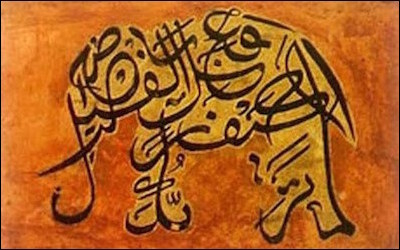
Neither before nor after the Brexit vote has the British elite dared to discuss the elephant in the room – radical Islam.
But trust ordinary Britons to be appalled at how their country was being reshaped to accommodate medieval values, not imported by Muslim immigrants, but entrenched in the values their British-born children were being taught at school.
The UK is not alone. From India to Myanmar, France to the Central African Republic, ordinary people are angry at Islamism.
As as a result, innocent Muslims suffer while their radical leaders gloat at this "proof" of their predictions that the '"kuffar," non-Muslims, are enemies of Islam.
If Muslim leaders do not acknowledge the flaunting of radical Islam on the streets and in the workplaces of Europe's cities, then Brexit is just the beginning.
Is blocking off streets in Paris and Delhi for Friday prayers the best way for Muslims to display our faith? It's time to take stock, but is anyone listening?
Tarek Fatah, a founder of the Muslim Canadian Congress and columnist at the Toronto Sun, is a Robert J. and Abby B. Levine Fellow at the Middle East Forum.

To subscribe to the MEF mailing lists, go to http://www.meforum.org/list_subscribe.php

How Merkel and Middle Eastern Migration Ensured Britain's EU Exit | Gurfinkiel in PJ Media

Middle East Forum
Promoting American Interests

Facebook  Twitter  RSS  Join Mailing List
Follow the Middle East Forum

How Merkel and Middle Eastern Migration Ensured Britain's EU Exit

by Michel Gurfinkiel
PJ Media
June 29, 2016
Be the first of your friends to like this.
Originally published under the title "The Road to Brexit: How Merkel Thwarted Cameron's Smart Gamble."
Polls show mass migration was the number one concern of voters in the Brexit referendum.
There were many signposts on the road to Brexit. As early as 2001, the Swiss rejected access to the EU by an overwhelming 72.5%. Four years later, in 2005, both the French and the Dutch rejected a European constitutional treaty project in separate referendums. Polls indicated that similar referendums would have turned the same way in other places.
In recent years, anti-EU defiance increased. Radical anti-EU parties and more moderate Eurosceptic parties won higher and higher returns in most countries, either in national or European ballots. In some countries -- Hungary, Poland, Greece -- they simply won the election and took over the cabinet. In others -- Austria -- they almost won.
Brexit is thus not so much a revolution in European affairs as the culmination of a long and steady process.
United Europe had been popular among Europeans, and every European nation was willing to join it -- as long as it delivered prosperity, democracy, stability. Global security.
This was true of the six founding nations in the 1950s and 1960s, of Britain, Ireland, Scandinavia and the former Mediterranean dictatorships in the 1970s, and of the former Communist countries of Eastern Europe in the 1990s.
Things changed by the mid-1990s, however, when what had been known hitherto as the European Community was changed into the much tighter European Union. It soon became apparent, whatever the political class would say, that the more centralized the Union became, the less it could actually deliver.

Instead of the ever-increasing prosperity they had taken for granted for a half-century, many Europeans had to face zero growth, bankruptcy, and long-term austerity programs. Instead of more democracy -- free expression, the rule of elected and responsible governments -- they were getting more political correctness and more bureaucracy.
Instead of more global security, a new pervading sense of powerlessness in front of Russian imperialism and jihadist terror. Instead of more stability, more social disruption -- especially in such essential areas as family and national identity.
The EU leadership was aware that things had gone sour and that disaffection was accumulating, but it was not mentally equipped to draw the proper consequences and find solutions.
David Cameron, the conservative Eurosceptic PM of Britain, was an exception in this regard: he had a plan, and a rather brilliant one at that. He was convinced he could have it both ways by organizing a British referendum on Europe -- thus allowing the anti-EU tide to rise very high – but to win it, even by a thin edge. He would then have appeared as the savior of Europe, and be in a position to ask for a global reshaping and loosening of the European treaties.
Maybe such a calculation was sound enough in 2013, when Cameron promised to hold a referendum on the British EU membership. There was, however, a dramatic acceleration in the European and British anti-EU public opinion over the past three years. So much so that while Cameron may have been banking on 52% to 48% returns against Brexit, he got just the opposite.
German Chancellor Angela Merkel brought some 800,000 migrants almost overnight into her own 80-million-person country.
Several developments contributed to the pro-Brexit shift. The EU political leadership's failure to address the global Middle Eastern and North African issues -- from the rise of ISIS to the return of Russia, and from the involvement of European Muslims in jihadist massacres in Europe to the migrant crisis -- and German Chancellor Angela Merkel's role in those issues were probably decisive.
Above all, Merkel's sudden and unilateral embrace one year ago of the Middle Eastern and North African migrants and refugees changed everything. She called for the immediate admission of hundreds of thousands, even millions, to the EU on a proportional per country basis. Indeed, she brought some 800,000 migrants almost overnight into her own 80-million-person country. This move brought a wide range of intractable difficulties, including with sexual ethics and women's rights issues.
Most other European countries acquiesced to Merkel's call -- but in fact downsized their own admission quotas to much smaller numbers. Hungary, Slovenia, and Poland flatly rejected Merkel's guidelines.
Many Brits concluded that Eurofederalism led to reckless decisions concerning mass immigration.
Merkel's then made a no-less-sudden and unilateral rapprochement with Turkey once it was clear that more migrants were planning to settle in the EU. She traded a promise by Ankara to tighten its borders with European countries against a promise to resume decades-old talks for Turkey's access to the Union. In the meantime, she proposed letting all Turkish citizens into the EU as visitors -- even without a visa. There are exactly as many Turks today as Germans: 80 million.
The British -- who in spite of an outwardly tolerant view of multiculturalism, have more restrictive immigration laws than most other EU nations, and who never endorsed the Schengen accords about free movement in the EU -- were deeply puzzled. Many of those who had wavered until then between Euroscepticism and Eurofederalism concluded that Eurofederalism was leading to reckless, ill-conceived, and unstoppable decisions in such essential fields as mass immigration.
The mess had to be checked, or at least Britain should be kept out of it. Brexit might have looked in the past a bit quixotic, and the European option might have been seen as safer. Thanks to Merkel, the proposition was now reversed.
Michel Gurfinkiel, a Shillman-Ginsburg Fellow at the Middle East Forum, is the founder and president of the Jean-Jacques Rousseau Institute, a conservative think tank in France.

To subscribe to the MEF mailing lists, go to http://www.meforum.org/list_subscribe.php