| ||||||
| Homepage Articles Blog | ||||||
| You can help support Daniel Pipes' work by making a tax-deductible donation to the Middle East Forum. | ||||||
Please take a moment to visit and log in at the subscriber area, and submit your city & country location. We will use this information in future to invite you to any events that we organize in your area. Dear Reader: I am pleased to announce the recent posting at http://www.danielpipes.org/ of some of my early publications, going back as far as 1968. These include, in particular, three major studies:
My thanks to Katherine Seifert of Bryn Mawr College for preparing the articles; and to The Washington Institute for Near East Policy for making available PDFs of the two studies on Syria. Yours sincerely, Daniel Pipes The Solace of Poor U.S.-Israel Relationsby Daniel Pipes http://www.danielpipes.org/8244/poor-us-israel-relations
Things are not always as simple as they seem; the current crisis in U.S.-Israel relations has a silver lining. Four observations, all derived from historical patterns, prompt this conclusion: First, the "peace process" is in actuality a "war process." Diplomatic negotiations through the 1990s led to a parade of Israeli retreats that had the perverse effect of turning the middling-bad situation of 1993 into the awful one of 2000. Painful Israeli concessions, we now know, stimulate not reciprocal Palestinian goodwill but rather irredentism, ambition, fury, and violence. Second, Israeli concessions to the Arabs are effectively forever while relations with Washington fluctuate. Once the Israelis left south Lebanon and Gaza, they did so for good, as would be the case with the Golan Heights or eastern Jerusalem. Undoing these steps would be prohibitively costly. In contrast, U.S.-Israel tensions depend on personalities and circumstances, so they go up and down and the stakes are relatively lower. Each president or prime minister can refute his predecessor's views and tone. Problems can be repaired quickly. More broadly, the U.S.-Israel bond has strengths that go far beyond politicians and issues of the moment. Nothing on earth resembles this bilateral, "the most special" of special relationships and "the family relationship of international politics." Like any family tie, it has high points (Israel ranks second, behind only the United States, in number of companies listed on NASDAQ) and low ones (the Jonathan Pollard espionage affair continues to rankle a quarter century after it broke). The tie has a unique intensity when it comes to strategic cooperation, economic connections, intellectual ties, shared values, United Nations voting records, religious commonalities, and even mutual interference in each other's internal affairs. From Israel's perspective, then, political relations with the Arabs are freighted but those with Washington have a lightness and flexibility. Third, when Israeli leaders enjoy strong, trusting relations with Washington, they give more to the Arabs. Golda Meir made concessions to Richard Nixon, Menachem Begin to Jimmy Carter, Yitzhak Rabin, Binyamin Netanyahu, and Ehud Barak to Bill Clinton, and Ariel Sharon to George W. Bush.
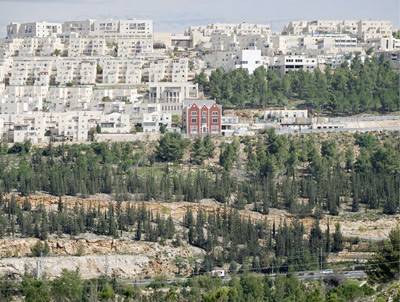
Conversely, mistrust of Washington tightens Israelis and closes the willingness to take chances. That was the case with George H.W. Bush and is even more so with Barack Obama. The current unease began even before Obama reached the Oval Office, given his public association with prominent Israel-haters (e.g., Ali Abunimah, Rashid Khalidi, Edward Said, Jeremiah Wright). Relations degenerated in March, when his administration simulated outrage on the 9th over an announcement of routine construction work in Jerusalem, followed by a brutal telephone call from the secretary of state on the 12th and a tense White House summit meeting on the 23rd.
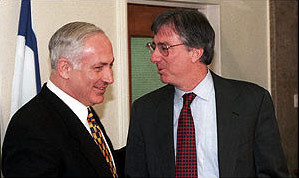
To make matters worse, the Obama administration figure most identified with maintaining good U.S.-Israel relations, Dennis Ross, was anonymously accused by a colleague on March 28 of being "far more sensitive to Netanyahu's coalition politics than to U.S. interests." A prominent foreign policy analyst used this to raise questions about Ross having a "dual loyalty" to Israel, impugning Ross' policy advice. These ugly and virtually unprecedented tensions have had a predictable effect on the Israeli public, making it mistrustful of Obama, resistant to U.S. pressure, while inspiring usually squabbling politicians to work together to resist his policies. Fourth, U.S.-Israel tensions increase Palestinian intransigence and demands. Israel in bad standing empowers their leaders; and if the tensions arise from U.S. pressure for concessions to the Palestinians, the latter sit back and enjoy the show. This happened in mid-2009, when Mahmoud Abbas instructed Americans what to extract from Jerusalem. Conversely, when U.S.-Israel relations flourish, Palestinian leaders feel pressure to meet Israelis, pretend to negotiate, and sign documents. Combining these four presumptions results in a counterintuitive conclusion: Strong U.S.-Israel ties induce irreversible Israeli mistakes. Poor U.S.-Israel ties abort this process. Obama may expect that picking a fight with Israel will produce negotiations but it will have the opposite effect. He may think he is approaching a diplomatic breakthrough but, in fact, he is rendering that less likely. Those who fear more "war process" can thus take some solace in the administration's blunders. The complexity of U.S.-Israel relations leaves much room for paradox and inadvertency. A look beyond a worrisome turn of events suggests that good may come of it.
Related Topics: Arab-Israel conflict & diplomacy, Israel, US policy This text may be reposted or forwarded so long as it is presented as an integral whole with complete information provided about its author, date, place of publication, and original URL. | ||||||
To subscribe to this list, go to http://www.danielpipes.org/list_subscribe.php Sign up for related (but non-duplicating) e-mail services: |

 Send
Send Comment
 RSS
RSS




 Posts
Posts


No comments:
Post a Comment