Policy Against Terrorism Begins with Human Rights
May 12, 2010
Responsible for Equality And Liberty (R.E.A.L.)
http://www.realcourage.org/2010/05/policy-against-terrorism-begins-with-human-rights/
Today, at
the White House, supporters of R.E.A.L. will be asking U.S.
President Obama and Afghanistan President Karzai to reconsider the
planned discussions on "reintegration" and "reconciliation" of Taliban
supremacists in Afghanistan, including suggestions to allow them to
return to the police and armed forces.
The reason that the United States of America is in Afghanistan today
is because of the September 11 attacks on America by Al-Qaeda
terrorists, with the Afghanistan Taliban providing a safe haven for such
terrorist training and plots to kill thousands of Americans. The
statutory reason that the United States is in Afghanistan is based on
the September 2001 Authorization for Use of Military Force, which gives
vague terms around what the American military can do in response to
those associated with the 9/11 attacks.
But if we have learned anything from the 9/11 attacks, it is that
there are those in the world who deliberately and consciously seek to
reject our unqualified, universal human rights. There are those who
reject our freedom of conscience, freedom of speech, freedom of press,
and our right to life, liberty, and the pursuit of happiness. There are
those who reject a pluralist society that respects our differences, but
ensures our unity in an omniculture of universal human rights.
Any foreign or domestic policies that ignore human rights and that
ignore women's rights (half of humanity) are bad decisions, and
directions that we will not support.
We have seen a steady stream of HATE against women in Afghanistan,
some of it by the Taliban, and some of it by the Afghanistan
government. Such hate begins with a conscious and deliberate rejection
of our unqualified, universal human rights. Such hate and rejection of
human rights is the same root cause of terrorist tactics whether they
are domestic or international. This is what American and Afghanistan
government policy must first address.
On May 6, 2010, another Taliban
attack on government office resulted in the death of an Afghan woman.
Recently, a woman
was murdered in Kandahar as she left work. Women's rights activist
Roona
Tahrin regularly gets death threats in Afghanistan, and another women's
rights activist was murdered a year ago. On April
24, 2010, girl's schools in Kunduz province was attacked with poison
gas, sending nearly 90 girls to the hospital. On May 4,
2010, there was another poison gas attack on a girl's school in Kabul,
putting another 20 girls in the hospital. Then once again, on May 11,
2010, there was yet
another poison gas attack on girl's schools in Kunduz and Kabul,
with so many girls coming into the hospital a doctor told Reuters that
they couldn't give an accurate count of those affected.
So when Afghanistan President Karzai repeatedly calls for talks and
negotiations with the supremacist Taliban, it is understandable why some
women's
rights activists ask who is the "good Taliban," why other women's
rights activists feel women's rights are being forgotten, and why
other women state that Afghan President Karzai is "failing women."
But the rejection of human rights for women and others goes beyond
the Taliban. The Taliban are a reflection of such hate also found in
the Afghanistan government and society.
In March 2010, Reuters
reported on Afghan girls who have been imprisoned in Kabul for the
"crime" of avoiding forced marriages and "moral crimes." Reuters also
reports on one 16
year old girl "sold, raped and jailed, a girl faces Afghan justice" - a
girl raped while incarcerated. The United
Nations has repeatedly warned about that violence, abuse, and rape
of women is "widespread" in Afghanistan, it warns
about how women are bought and sold in Afghanistan, and it warns about
"a culture of impunity that leaves such crimes unpunished." Just a year
ago, the Afghanistan
government sought to pass a bill legalizing marital rape for Shiite
Muslims; an "amended
version" permitting starvation of women was quietly passed in August
2009. One cleric, Mohammad
Asif Mohseni, told the media that such rape was defended as part of
Afghanistan "democratic rights," and asked ""Westerners claim that they
have brought democracy to Afghanistan. What does democracy mean?"
In the United States, our government leaders apparently cannot answer
that question. Richard Holbrooke complains
that Americans should not expect a "perfect democracy" in Afghanistan.
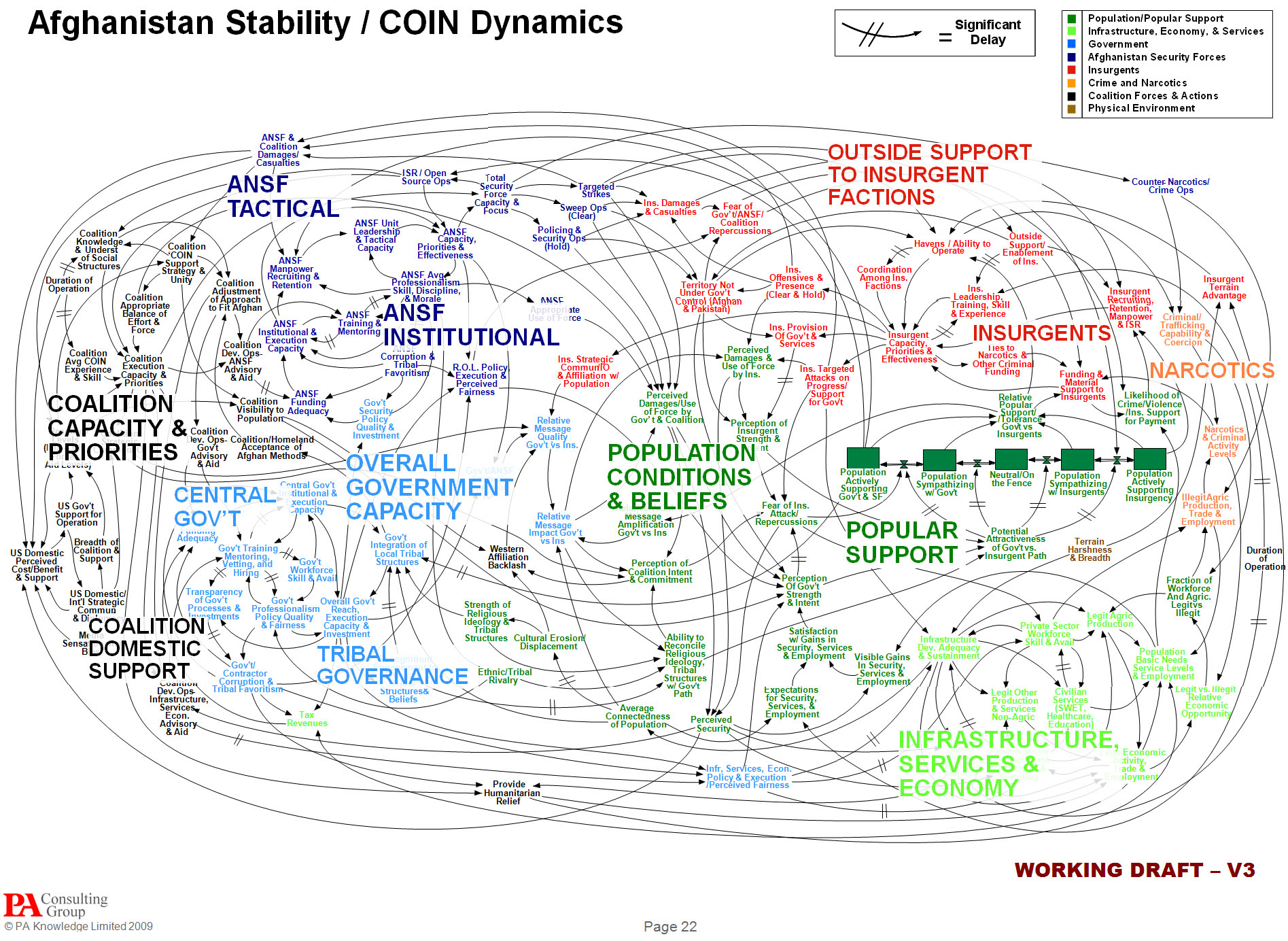
The U.S. has provided a
graphic (see
larger size) that illustrates its "strategy" in Afghanistan.
Notably, it is not centered on human rights or women's rights.
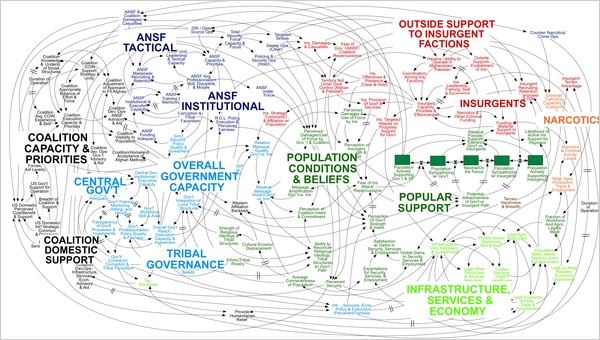
In Afghanistan, Americans must ask where is the policy for human
rights? Where is the policy to address the root causes of terrorism?
What are we fighting for?
Human rights and women's rights are not an afterthought, not a
marginal issue for human peace, and certainly not inconsequential in
addressing the ideological basis for terrorism tactics.
We will have no security without human rights. We will have no
security without women's rights.
We will have no conscience if we abandon the Afghanistan women to
hate, misogyny, violence, and yes - the TERRORISM - of the Taliban and
those who view women as less than human beings.
When we abandon the victims of terrorism, we enable terrorists
themselves.
Choose
Love, Not Hate. Love Wins.
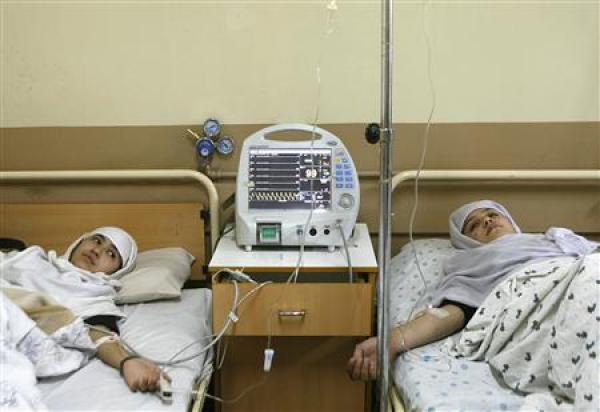
- Afghanistan: Girls recovering from poison gas
attack (Photo: Reuters/Mohammad Ishaq)


 Posts
Posts


No comments:
Post a Comment