|
|
Follow the Middle East Forum
|
|
|
Does the
Israeli-Palestinian Conflict Still Matter?
|
|
|
Share:  
|
  Be the first of your friends to like this. Be the first of your friends to like this.
Originally published under the title "So, I Guess It Wasn't
All Israel's Fault After All."
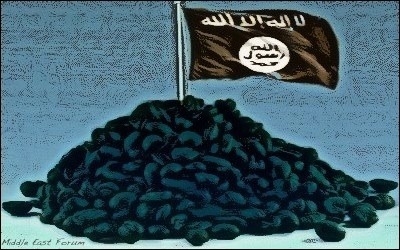
A friend of mine recently lamented that the Western media was
downplaying the brutal string of Palestinian stabbings that has claimed 25
Israeli lives since September.
I nodded in assent, but couldn't help recalling the closing scene of the
film Casablanca. With religious and ethno-sectarian violence rampant in
Iraq, Syria, Libya, Yemen, and across the Arab world claiming several tens
of thousands of lives every year, fuelling an unprecedented wave of global
Sunni Islamist terror, Israeli-Palestinian troubles "just don't amount
to a hill of beans in this crazy world."
It wasn't so very long ago that the vast majority of Western pundits
thought otherwise. Since Israel stood alone as the most vilified antagonist
in Arab public life for over six decades, outside observers assumed the
Israeli-Palestinian conflict to be a singular affront to Arabs everywhere,
a cause of their collective political dysfunction, and therefore a leading
source of the Middle East's problems. Arab anger toward Israel
"weakens the legitimacy of moderate regimes," explained U.S.
CENTCOM commander David H. Petraeus in 2010.
If the "Arab Spring" has
taught us anything, it is that Israel isn't central to the region's
problems.
|
Take away the source of this anger, the reasoning went, and problems
such as poverty, Islamism, and the like would be easier to solve. Israelis
and Palestinians both played into the belief that a solution to the
Israeli-Palestinian conflict would allow for a "new" Middle East
(foreign aid supplicants rarely lead with, "Not that this matters much
..."). A half-century of American diplomacy was built on this premise.
If the so-called "Arab Spring" has taught us anything,
however, it is that Israel isn't central to the region's problems, and
isn't even perceived as such by most non-Palestinian Arabs. Since
anti-Zionism was typically the only anti-establishment political cause that
tyrants routinely allowed their citizens to openly embrace, many did so
with gusto, if only to vicariously express their rejection of the status
quo. But the weakening and collapse of authoritarian regimes since 2011 has
revealed that ordinary citizens care about a great many things more than
"justice" for the Palestinians.
Anti-Israeli slogans were relatively few and far between in revolts that
brought down governments in Egypt, Tunisia and Libya, while insurgents in
Syria and Yemen have virtually ignored the Jewish state. Absent a
carefully-controlled political environment in which ethno-sectarian
grievances are heavily suppressed by the state, radical Islamists outside
of the Palestinian territories are more interested in fighting the
"far enemy" in the West and subduing "infidel"
adversaries closer to home (Shi'a, Yezidis, Christians, etc.) than in
fighting Israel.
While the Palestinian Islamist Hamas movement is as determined as ever
to kill Israelis, the scale of Israeli-Palestinian violence in recent years
barely registers as an armed conflict by today's regional standards. Even
the July-August 2014 Gaza war — the big exception to this period of
relative calm — was far outpaced by bloodletting in Syria and Iraq that
summer.
Israelis and Palestinians must get
used to a brave new world in which the particulars of their fight don't
matter that much to the rest of us.
|
Moreover, unlike these other regional bloodbaths, this old-school
slugfest between Israelis and Palestinians is not threatening to overturn
the status quo. Every few years, Israel smashes Hamas' military
infrastructure sufficiently to ensure a few more years of relative quiet
("mowing the lawn," as they say), which Hamas provokes in order
to burnish its stature as a resistance movement, raise loads of money from
the Arab world, and rationalize its heavy-handed rule in Gaza. In between,
both sides find ingenious ways to harm the other without violating the
truce. The Lebanese Shiite Hezbollah movement used to play the same game
with the Israelis until it got sucked into the Syrian meat grinder.
This cycle of episodic violence is tragic, but it's a fairly stable
equilibrium so long as all stakeholders consider it minimally preferable to
an Israeli reoccupation of Gaza. It's an issue of concern that ranks well
behind the surrounding Arab Levant's self-immolation, Iran perched on the
precipice of producing nuclear weapons, Russia intervening in the region
with reckless abandon, Turkey's bid to unite Sunni Arabs under its wing,
and myriad other dangers.
Of course, we should do what we can to help Israeli-Palestinian peace,
condemn egregious acts of violence, and blunt misguided European and Arab
diplomatic initiatives likely to make things worse. But Israelis and
Palestinians are going to have to get used to a brave new world in which
the particulars of their fight don't matter that much to the rest of us.
They should take it as a compliment.
Gary C. Gambill is a research
fellow at the Middle East Forum
|
|
|
|



 Posts
Posts


No comments:
Post a Comment