In Europe, Muslim Extremists Turn To Sexual Terrorism
In
the wake of the New Year’s Eve mass sexual assaults in Cologne, it
would be madness to ignore the persistent trend in the Muslim world of
physical violence toward women.

Europe
has a big problem on its hands. On Sunday, Germany’s justice minister
said a series of attacks across the country on New Year’s Eve appear to
have been pre-planned.
In downtown Cologne, about a thousand men of Arab and North African
descent entered a square full of celebrators and proceeded to surround
women, robbing and in many cases sexually assaulting them.
Police describe a horrifying scene of women running terrified and attackers aggressively pushing back police. So far, 170 women
have come forward with complaints, three-fourths of which involve
sexual assaults. Similar attacks from that night have been reported in Hamburg, Stuttgart, Frankfurt, and Düsseldorf.
It now appears that officials tried to cover up the attacks lest they stoke anti-immigrant sentiment. On Friday, Cologne’s police chief was fired
because of his poor handling of the attacks in the first few days of
the new year. Rather than face the reality that they have a problem with
their Muslim population, city officials tried to sweep it under the
rug.
Hiding Sexual Assault In the Name of Tolerance
How they thought they could conceal an attack of this scale and nature is difficult to say. Then again, they’re just following a rising European trend. Consider the Rotherham rape scandal last year in Britain, which revealed that police and social workers had for years been hiding what amounted to 1,400 gang rapes of young women and girls by men of Pakistani descent. Social workers and others claimed they were afraid to come forward for fear some would accuse them of racism and “Islamaphobia.”
Something similar is happening in Cologne. Mayor Henriette Reker was
quick to come out and claim “there are no indications that this involved
people who have sought shelter in Cologne as refugees.”
On Friday, news broke that 18 of 31 identified suspects were confirmed asylum-seekers. German’s leaders rushed to insist this couldn’t possibly have anything to do with the recent migrant crisis, before knowing the facts.
On Friday, news broke that 18 of 31 identified suspects were confirmed asylum-seekers. German’s leaders rushed to insist this couldn’t possibly have anything to do with the recent migrant crisis, before knowing the facts.
This isn’t just a European habit. Recall the U.S. media’s initial
knee-jerk denial of the motivations of the San Bernardino terrorists.
But Europe is especially afraid to acknowledge it has a problem with its
Muslim population, and its leaders are giving the impression they don’t
take the problem seriously.
To prevent similar attacks during Carnival celebrations next month,
Reker awkwardly proposed that city officials would work to explain
Carnival to people from other cultures so they won’t be “confused” about
“celebratory behavior in Cologne,” as if the New Year’s Eve attackers
merely didn’t understand that sexual assault is an inappropriate way to
“celebrate” and all that’s needed to uproot deeply held cultural norms
is a little bit more information.
The Muslim World Has a Violence Against Women Problem
To date, only 18 of the approximately 1,000 attackers have been confirmed as asylum seekers. But what about the rest of them? They may have been second- or third-generation immigrants from Muslim-majority countries, which suggests these communities are not assimilating sufficiently into European society and are not adopting its most important cultural norms.
It’s often the second and third generation, not the first, that is most resistant to Western culture.
Of course we should be careful not to portray all Muslim men as
violent and repressive toward women. However, it would be madness to
ignore the pervasive and persistent trend in the Muslim world of
treating women as unequal to men and being physically violent toward
them.
Until recently, women in Morocco (the most progressive Muslim state)
couldn’t travel without permission from their father or a male relative,
and courts often forced rape victims to marry their rapist. Women in
Morocco (including many of my own personal acquaintances) are habitually
chased, harassed, and groped. Groping and sexual assault tend to happen
when large crowds gather, like in Tahir Square during the Egyptian Arab
Spring—and what happened across Germany on New Year’s Eve.
Even a liberal Moroccan Muslim public intellectual, Fatima Sadiqi,
once said in a lecture that men and women are equal, but women belong in
the home sphere while men belong in the public one. This is the mildest
way to interpret Muslim cultural attitudes toward women.
But let’s assume that it’s the correct one, for the sake of argument.
Is this an acceptable future for Germany, or for any part of Europe?
Given the continent’s rapidly changing demographics, where it’s predicted that by 2050 10.2 percent of the population will be Muslim, this is a question Europeans must answer.
Assimilation Is Now a Life or Death Project
It seems German officials are not worried enough about the potential problems a huge influx of mostly male emigrants from Muslim majority countries may bring. We live in an age where suggesting migrants need to assimilate is seen as colonialist and anti-multicultural. Yet not expecting them to accept some of the core values of the country they would call home—like treating women with respect—invites violent outbursts like those on New Year’s Eve, or worse, terrorist attacks like those in November in Paris.
Not expecting immigrants to accept some of the core
values of the country they would call home—like treating women with
respect—invites violent outbursts.
Yet it seems like no one in charge is really that concerned—or if
they are, they’re too politically correct to come out and say it, much
like some liberals in America are reluctant to put the words “Islam” and
“terrorist” in the same sentence.
If Europe’s political leaders don’t adequately address these real and
troubling concerns and convince voters they’re taking it seriously,
they will have a rebellion on their hands. Ignoring these incidents in
the name of “tolerance” will further fuel far-right nationalist
movements and xenophobic rhetoric.
It’s easy to see how attacks like this one will become a useful
talking point for the far right, a ready-made argument against
immigration. It’s also easy to see how it could point back toward the
kind of nationalism that Europe has tried so hard to leave behind.
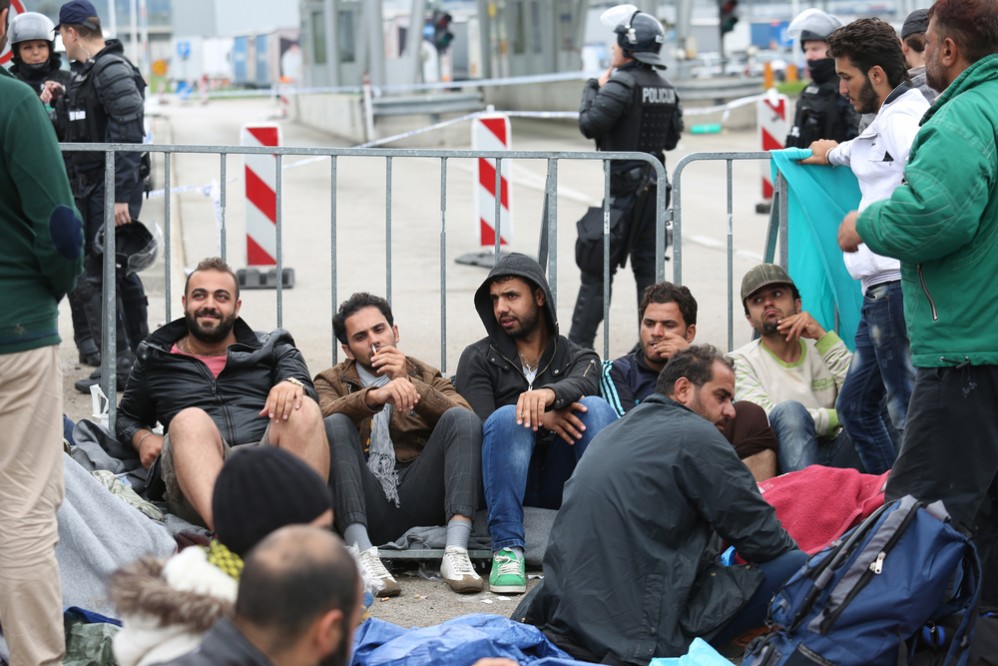
Photo Photoman29 / Shutterstock.com
M.
G. Oprea is a writer based in Austin, Texas. She holds a PhD in French
linguistics from the University of Texas at Austin. You can follow her
on Twitter at @mgoprea.


 Posts
Posts


No comments:
Post a Comment