  |
  

Follow the Middle East Forum
|
|
Related Articles
The Syrian Civil
War: An Interim Balance Sheet
  Be
the first of your friends to like this. Be
the first of your friends to like this. Intensified diplomatic efforts by the international community to put an end to the civil war in Syria are unlikely to reach a political long-term arrangement before the warring parties are exhausted by the conflict. It is often weariness that brings armed conflicts to a close, rather than a promising political solution offered by a disinterested mediator or international conference. Significantly, no protagonist seems to have overwhelming power to enforce its preferred solution. The Sunni powers, such as Saudi Arabia and Turkey, tried to unseat Syrian President Bashar al-Assad, the ally of Shiite Iran, but displayed weakness that was exploited by the Iranian Revolutionary Guards and Hezbollah. Even American aid to the Sunni rebels was ineffective. The much feared Islamic State (IS), born as a result of the disintegration of Iraq and Syria, was not strong enough to tackle the Assad regime successfully. The Russian military intervention was able to strengthen Assad's grip over parts of Syria, but was not enough to restore his rule over the entire country. This means that Syria will remain divided among several warring factions for some time to come. The fractured country will continue to be an arena in which local chiefs will try to expand their areas of control and in which outsiders will compete for influence. Fluidity and ambiguity will continue to characterize the arena.
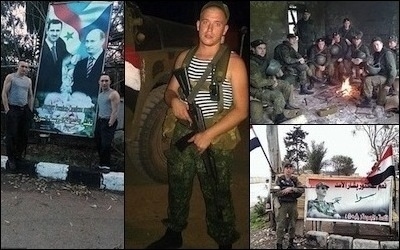
Russia emerged as a beneficiary of the lingering Syrian crisis even before its military intervention in September 2015. It was successful in providing the diplomatic mechanism that enabled Obama to renege on his ultimatum against Assad's use of chemical weapons, and has effectively defended the Assad regime at international forums. The Russian intervention on Assad's behalf also signaled that Moscow is a reliable ally, a message that resonates well among the political elites of the Middle East and beyond.
In contrast, the Syrian turmoil provided plenty of proof that the US, under Obama, is not adept at dealing with Middle East realities. One early example was the Obama administration's initial inclination to try to engage foes, such as Syria (and Iran). A defining moment of American weakness was the retreat from threats to use force against Assad for crossing the chemical weapons red line (August 2012). The American campaign against IS has provided additional evidence about the retreat of American power in the Middle East. In August 2014, after a confused and long decision-making process, the US concluded that the territorial conquests of IS are evolving into a significant threat to American interests and ordered its air force to raid installations of IS in Syria (and Iraq). Unfortunately, the gap between the goals and the capabilities of the US and its allies bolstered IS's dual message about the weakness of the decadent West and its own invincibility. By the beginning of 2016, the war against IS appeared stalemated. The US failed to induce local actors to cooperate effectively against it, and the limited air campaign has been insufficient.
Turkey appears to be at a loss after several years of futile support for Syrian rebels. The destabilization of Syria has underscored Turkey's long porous border, which exposes the country to terrorist attacks. At the same time, the influx of a multitude of refugees fleeing the mayhem has exacted an economic price on Ankara. Turkey's crucial support for IS has been gradually revealed, the full diplomatic cost of which remains to be seen. While Turkey has shown itself ready to confront Iran by proxies in Syria, underscoring the Sunni-Shiite fault lines and the regional Persian-Turkish rivalry, that readiness may well precipitate Iranian support for Kurdish militias, which constitutes a national security threat. Turkey also miscalculated in November 2015 by shooting down a Russian fighter, an action that triggered a deterioration in Turkey's strategic position by reviving the Ottoman-Russian historical enmity. In addition, Turkey's Syrian policy has had the unintended consequence of empowering the most virulently anti-Turkish Kurdish elements. These Kurds have achieved a measure of autonomy in several regions in northern Syria, and have earned some Western support thanks to their effectiveness against IS. Still, the limited self-rule the Kurds have established, and the international attention they have attracted to their cause, will not be enough for state-building. For them to achieve full autonomy, they will have to overcome internal discord and their lack of territorial contiguity.
The Syrian arena provides Israel with diplomatic opportunities to nourish relationships with reluctant actors. Jerusalem must work under the assumption that Syria cannot easily be fixed and that conflict is likely to continue. Israel's interactions within its strategic environment are inherently limited. The use of force, often inevitable in our neighborhood, must be carefully calibrated in light of domestic and international constraints. Efraim Inbar, a professor of political studies at Bar-Ilan University, is the director of the Begin-Sadat Center for Strategic Studies and a Shillman-Ginsburg fellow at the Middle East Forum. |
|||||||
|
To subscribe to the MEF mailing lists, go to http://www.meforum.org/list_subscribe.php |




 Posts
Posts


No comments:
Post a Comment