 |
The
UAE's Fragile Good Life
  Be the first of your friends to like this. Be the first of your friends to like this.Despite the country's many challenges – proximity to Iran and Iraq, almost no natural fresh water, oil prices tanking, 8/9ths of the population foreign, violent Islamists lurking – its 10 million inhabitants live well. Two basic facts set the scene. First, the UAE has the near-unique distinction of being (along with Switzerland), a country ruled by committee, a unique one: the seven rulers of the seven individual emirates. Further, those rulers are embedded in extended and influential families. This combination makes it difficult for one individual to dominate the country or to rule as a narcissist. At the same time, each sovereign (notably, the emir of Dubai) enjoys wide latitude within his own domain, giving each emirate a distinct character.
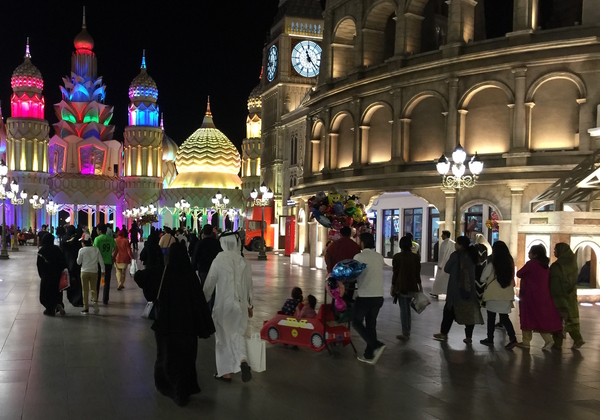
Paternalism implies simple rules: No challenging the rulers. Never try to reduce their power. Maintain public decorum and discretion. The result is a society focused on family and social relations, mall-shopping, entertainment, travel, and other innocent pleasures for children, families, and couples. Eroticism, edginess, and radicalism are unwelcome. News from the UAE tends to be bland, about the emir's meetings, oil price fluctuations, store openings, bridge closings, times of prayer, and sports scores. The flamboyant Atlantis Hotel in Dubai brings Las Vegas to mind, except gambling, booze, and prostitution are to varying degrees illegal. Global Village, also in Dubai, feels like a Disneyland spinoff.
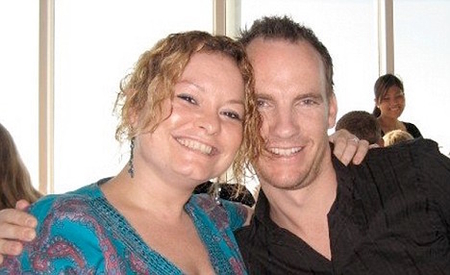
Although the system mostly works, it feels confining to foreigners accustomed to the hurly-burly of a free political marketplace, maximal self-expression, and the right to challenge mores. Anyone wanting to range outside acceptable Emirati boundaries is advised to live somewhere else, as punishments can be dauntingly severe. Two examples: A British duo who met at an all-you-can-drink champagne brunch then unwisely wondered off to a beach to make out (their version) or engage in intercourse (the government's version). They soon found themselves in a shot-gun marriage, fined, suffering mental problems, serving a 3-month jail term and then deported. An Australian woman irritated by a car taking up two disabled parking spaces knew Emirati customs well enough to obscure the license plate on her photograph before posting it on Facebook; nonetheless, the owner of the offending vehicle complained to the authorities about being insulted. They promptly arrested the Australian, strip-searched, convicted, jailed, then deported her.
Fortunately, due to social constraints, this sort of depravity is quite rare in the UAE. Compared to most Middle Eastern countries, the Emirates have found a formula for success. Committee rule has its limitations but, compared with the dictators dominating nearby countries, it looks pretty good. Hypocrisy is not charming but it beats the religious oppression found in next-door Saudi Arabia. My conclusion is one of caution. Whatever the UAE's faults, and they are plentiful, pushing for a more democratic government and a free-wheeling society risks spoiling this oasis of calm and opening the country to the furies that dominate the rest of the region. Better to leave it be and encourage its influence. Mr. Pipes (DanielPipes.org, @DanielPipes) is president of the Middle East Forum. © 2016 by Daniel Pipes. All rights reserved.
Related Topics: Persian Gulf & Yemen
This
text may be reposted or forwarded so long as it is presented as an integral
whole with complete and accurate information provided about its author, date,
place of publication, and original URL.
|
|||||||
|
To subscribe to this list, go to http://www.danielpipes.org/list_subscribe.php
Sign up for related (but non-duplicating)
e-mail services:
Middle East Forum (articles and event reports) Campus Watch (articles, blog posts) Islamist Watch (articles, blog posts) Legal Project (articles, blog posts) at http://www.danielpipes.org/list_subscribe.php |




 Posts
Posts


No comments:
Post a Comment