Boston U.'s
Irene Gendzier: U.S.-Israel Alliance Built on Oil
by Mara Schiffren
FrontPage Magazine
December 16, 2015
|
|
|
Share:  
|
  Be the first of your
friends to like this. Be the first of your
friends to like this.
[Ed.: FPM title, "Boston University's Irene Gendzier on Oil,
Israel, and 'Palestine.'"]
There is a certain class of academic for whom historical references to
oil become a clarion call to rise up, denounce, and publish. A recent book
talk proved the point. Rashid Khalidi, Columbia University's Edward
Said Professor of Modern Arab Studies, pronounced himself "lucky"
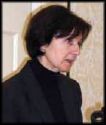
to have previewed the work of the speaker, Irene Gendzier, professor
emerita in the department of political science at Boston University:
She has . . . discovered things that those of us who thought we knew
something about Palestine often found a revelation.
High praise from the former PLO
spokesman for
Gendzier's new book,
Dying to Forget, Oil, Power, Palestine and the Foundations of U.S.
Policy in the Middle East. A mix of students, colleagues, friends of
the author, and the public totaling about forty-five squeezed into a tight
space on the second floor of a bookstore near Columbia.
Gendzier began by lamenting the recent ISIS attack on Paris, only to
pivot to the upheaval currently overwhelming the Middle East:
[W]hat about all the other events taking place? What about Beirut? What
about Yemen? What about Iraq? What about Syria? Why are we selective? The
selectivity of the mourning comes with something more. . . . A kind of
indifference about . . . "the deaths of others.". . . [T]he
terrible despair that comes from those that are permanently uprooted and
displaced, and exist nowhere as a result of wars. We seem not to think
about them.
This welling of empathy for ongoing conflicts, confined to countries
where the Arab world is battling itself and creating new refugees, allowed
her to invoke the manufactured refugee crisis of the post-WWII
Palestinians. Tellingly, she made no mention at this point to the Jews of
the Middle East or Europe, notoriously uprooted and displaced following
WWII. It was an early predictor for the lack of objectivity she displayed
throughout the talk.
From 1945-1948, Gendzier contended, there was a stable policy in place
among the "very, very few people who constituted the special
experts" in the U.S. State Department regarding the evolving situation
in Palestine. The underlying question was how the U.S. moved from what she
viewed as a favorable approach to the nascent Arab-Israeli conflict, with
strong, repeated support for the Palestinians, to the beginning of a
relationship between the U.S. and Israel that ostensibly left the
Palestinians behind. What tipped the status quo?
To answer, Gendzier turned to Saudi oil and its significance for the
region. "Oil is a weapon of war," she announced in stentorian
tones, recounting its importance in implementing successful U.S. foreign
policy, including both the Marshall plan and the Far East. Because of its
key role, the CIA feared that U.S. support for Partition would
"alienate Arab [oil] producers." Eventually, however, the
Americans realized they "had the whole thing reversed":
If the dependence was reversed . . . then what was the basis of the
fear? There was none. It was fear based on misunderstanding. The correct
understanding was that . . . Arab oil-producing regions were dependent on
U.S. companies for the production, transport, and sale of their oil.
In other words, instead of deferring to Saudi interests to maintain
American regional dominance, as U.S. policy makers had initially done, they
were free to pursue their own interests. Left unspoken—and it would
certainly weaken her argument—was the corollary: the aforementioned
pro-Palestinian policy positions were constructed with a view to pleasing
the Saudis so as to strengthen U.S. oil interests. Was she afraid that oil
would taint the Palestinian position?
Gendzier recounted that Truman ended by supporting Israeli independence,
despite tremendous opposition from his secretaries of state, defense and
his Joint Chiefs of Staff. However, it was only in 1949, the year following
Israel's victory against her Arab adversaries, that the U.S. formulated a
policy to ally with Israel. The rapidity of this complete turnaround
initially "shocked her," she admitted.
During the question and answer period, when Gendzier was speaking more
loosely, she revealed that Israel's military prowess had an impact on U.S.
administrators:
So even though the disparity in numbers [between opposing sides] was
extraordinary, let's face it, [the Israelis were] the only ones with
discipline, with training, with the sense of a goal.
Her withering tones rendered nefarious a simple fact: Israeli competence
drew the attention of U.S. policy makers, who saw it as extremely useful
for American positioning in the Middle East. Thus, at this time of strong realpolitik,
a closer relationship between the U.S. and Israel was initiated.
No discussion of this period by today's academic apologists for Arab
terror would be complete without mention of "Jewish terrorists,"
and Gendzier was no exception:
U.S. officials were very impressed by the fact that the different Jewish
militias, that identified as terrorist groups, the Irgun and Lehi, that
they were capable of committing all kinds of acts that were tentatively
disavowed by the Haganah, but then, in point of fact, were accepted; that
they violated various truce agreements without any repercussions. They
seemed, in some rude way, to get away with it.
By implication, she viewed both Israel and America, which she described
as remaining "in the shadow of Hiroshima and Nagasaki," as
terrorist states. Meanwhile, she omitted any malfeasance on the Arab side.
Despite the veil of historical objectivity, Gendzier's prejudices were
evident. Throughout the talk, she distanced herself from the Israelis,
while expressing unequivocal empathy for the Palestinians. She referred to
Jews in Israel as "Zionists"—a term that has taken on a demeaning
connotation among her academic cohort—or as outsiders, in contrast to the
ostensibly indigenous Palestinians. For instance, "The discussion is
of a political conflict among incompatible groups: one, the people who live
in the land, the other is the Zionist Movement."
This hardly painted a balanced picture, but it was clear she was not
interested in balance, but in redressing what Middle East studies
practitioners view as a primordial sin committed against Palestinians by
the alliance between the U.S. and Israel. Be it oil or Zionism, for such
scholars, a hidden, immoral reason for the strong U.S.-Israeli alliance
must be uncovered and condemned. Under such an academic regime, objective
scholarship is an impediment to the further politicization of the
discipline.
Mara Schiffren, who has a Ph.D. from Harvard University in the Study
of Religion, is currently working on a book about historical Israel. She
wrote this essay for Campus Watch, a project of the Middle East Forum.
This
text may be reposted or forwarded so long as it is presented as an integral
whole with complete and accurate information provided about its author,
date, place of publication, and original URL.
Related Items
|




 Posts
Posts


No comments:
Post a Comment